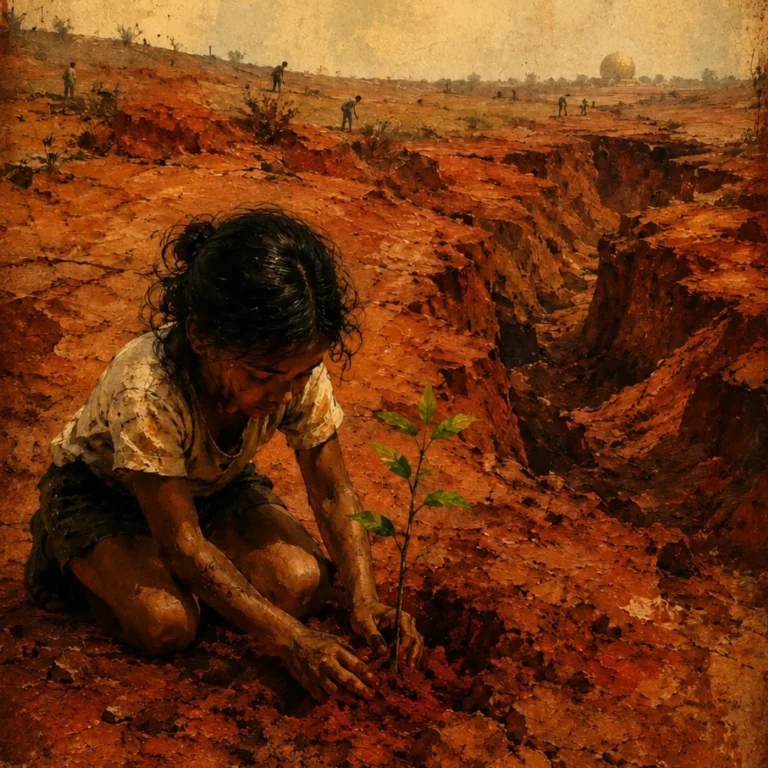
Summary – February to June 2026
Previous issues of Voices of Auroville have documented the systematic dismantling of Auroville’s self-governance, ecological achievements and experimental nature since 2021, when the governement appointment of a new Secretary and Governing Board set in motion a sustained campaign to displace community governance and decision-making with top-down administrative control. An overview can be accessed at www.auroville.media/crisis.
This issue covers events from roughly February to June 2026, a period in which the pace of the adversarial campaign has not slowed. With the Governing Board’s four-year tenure concluded in October 2025 and no new Board appointed yet, the Foundation Office under Secretary Dr Jayanti Ravi continues to act unilaterally as though it is the sole governing authority. The community, meanwhile, continues to peacefully re-assert its roles in Auroville’s governance and evolution.
The months covered here have seen two long-standing community members taken under police escort to the airport, violent confrontations at the Youth Centre and at the Town Hall, a new round of highly questionable land transactions, and a series of court rulings that have, for now, gone against residents. There has also been renewed community solidarity, widening national attention, and the first signs that civic pressure from outside Auroville may open new avenues for change.
Visa and Expulsion Pressure Escalates
Two residents forced to leave under police escort
On 29th April 2026, Daniel and Dariya, two Aurovilians who had been living in Auroville for 21 and 35 years respectively, were escorted by police to Chennai airport and required to leave India that same day. Both worked at Quiet Healing Center, and were known for their aquatic body work sessions and facilitation of healing workshops.
The expulsion followed a “Leave India Notice” issued by the Foreigners Regional Registration Office (FRRO) in November 2025, for reasons that have not been officially disclosed. Two possible explanations have been put forward. The first is that the Auroville unit under which Daniel and Dariya offered aquatic body work sessions outside Quiet Healing Center had been closed by the Foundation Office’s financial committee without prior notice, and they continued offering a small number of training sessions for Watsu body work practitioners while searching for a new institutional framework. The second is that the Foundation Office reportedly accused them of being “anti-government” without giving them any opportunity to respond. Their case illustrates how Foundation Office policies can effectively strip residents of their ability to work legally within Auroville, and then use that inability as grounds for expulsion.
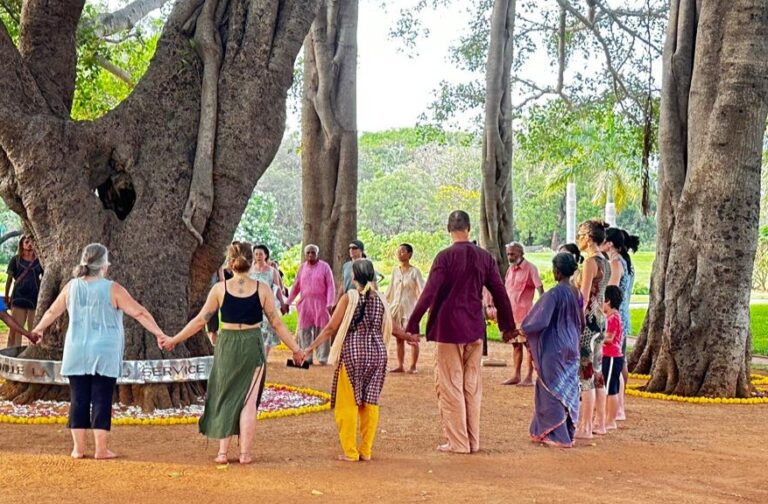
Despite meeting senior immigration officials in Delhi to plead their case, they received a message on 28th April instructing them to purchase onward flight tickets immediately or face deportation to Trichy detention camp. They booked tickets for 17th May, yet the following morning, police arrived at their home and informed them they had one hour to pack before being transferred to the detention camp. After urgent negotiations, they managed to secure a same-day flight at significant expense. Dozens of Aurovilians filled their home to help them pack up a lifetime within a half day, and then held a collective meditation under the Matrimandir Banyan Tree. They were placed in a barred police vehicle and driven to Chennai airport, escorted by armed officers who accompanied them through every step of the departure process until they boarded their flight.
In a letter written afterwards, Daniel described the “deeply distressing” experience as “beyond words: physically, emotionally, and mentally”. They arrived in Bangkok with two suitcases, facing an uncertain future far from the community they had long called home. “Our entire lives,” Daniel wrote, “our home, our work, our sense of belonging – have been rooted in Auroville.” They have expressed their hope to return.
A widening visa crisis
The cases of Daniel and Dariya are not isolated. Over recent years, many international residents have found themselves unable to return to Auroville because the Secretary has not signed the letters of recommendation that Indian immigration authorities require before granting a long-stay visa to foreign Aurovilians. Others cannot leave Auroville for travel because their visas have expired and they have not received any letter. In October 2025, one Aurovilian was turned away at Chennai airport when entering India, despite holding a valid visa. On 1st May 2026, the Auroville Council and the Working Committee of the Residents’ Assembly published a joint statement confirming that “visa difficulties are affecting a growing number of Auroville residents” and reaffirming that all those affected “continue to be considered Aurovilians”.

The Youth Center and Town Hall: Violence, Denials, and Alternative Proposals
A new demolition assault on the Youth Center
The Youth Centre, a gathering, learning and co-living space for young people, has been subjected to a series of pressures by the Foundation Office since 2021, including the bulldozing of community structures, threats to inhabitants, and restrictions on its activities.
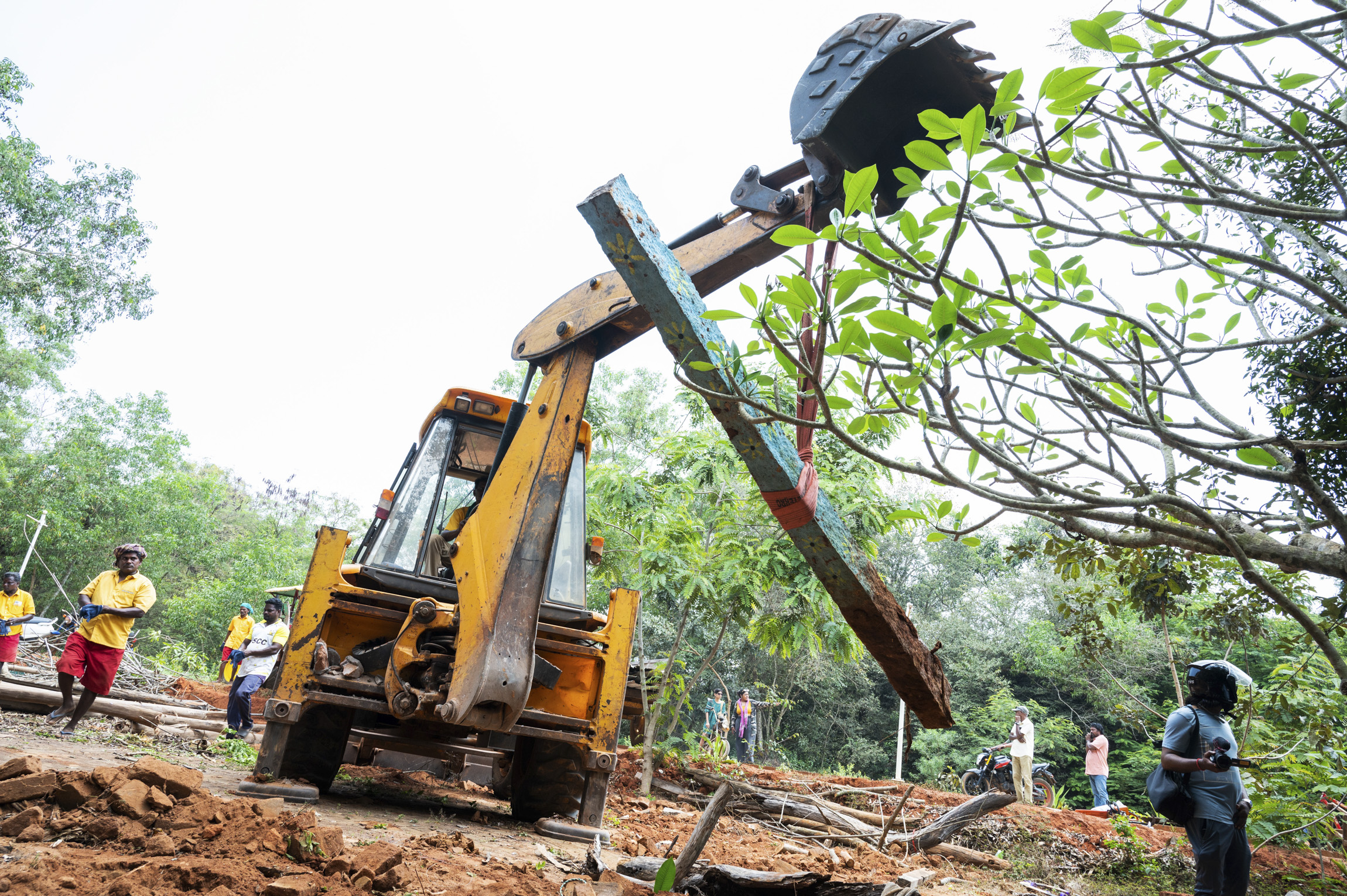
On 20th March 2026, a group of approximately 30 Foundation Office-appointed individuals arrived unannounced at the Youth Centre with heavy machinery and heavy vehicles. The operation was described by them as “the clearing of an unauthorised and long-standing encroached settlement”. Among those leading the group were individuals who hold multiple Foundation Office positions, including Sindhuja, Antim, Joel and Muriel. Sindhuja, for instance, is simultaneously Head of Town Planning, Official Spokesperson, Media Content Vetter, member of the Human Resource Service, and Legal Coordinator for the Foundation Office.
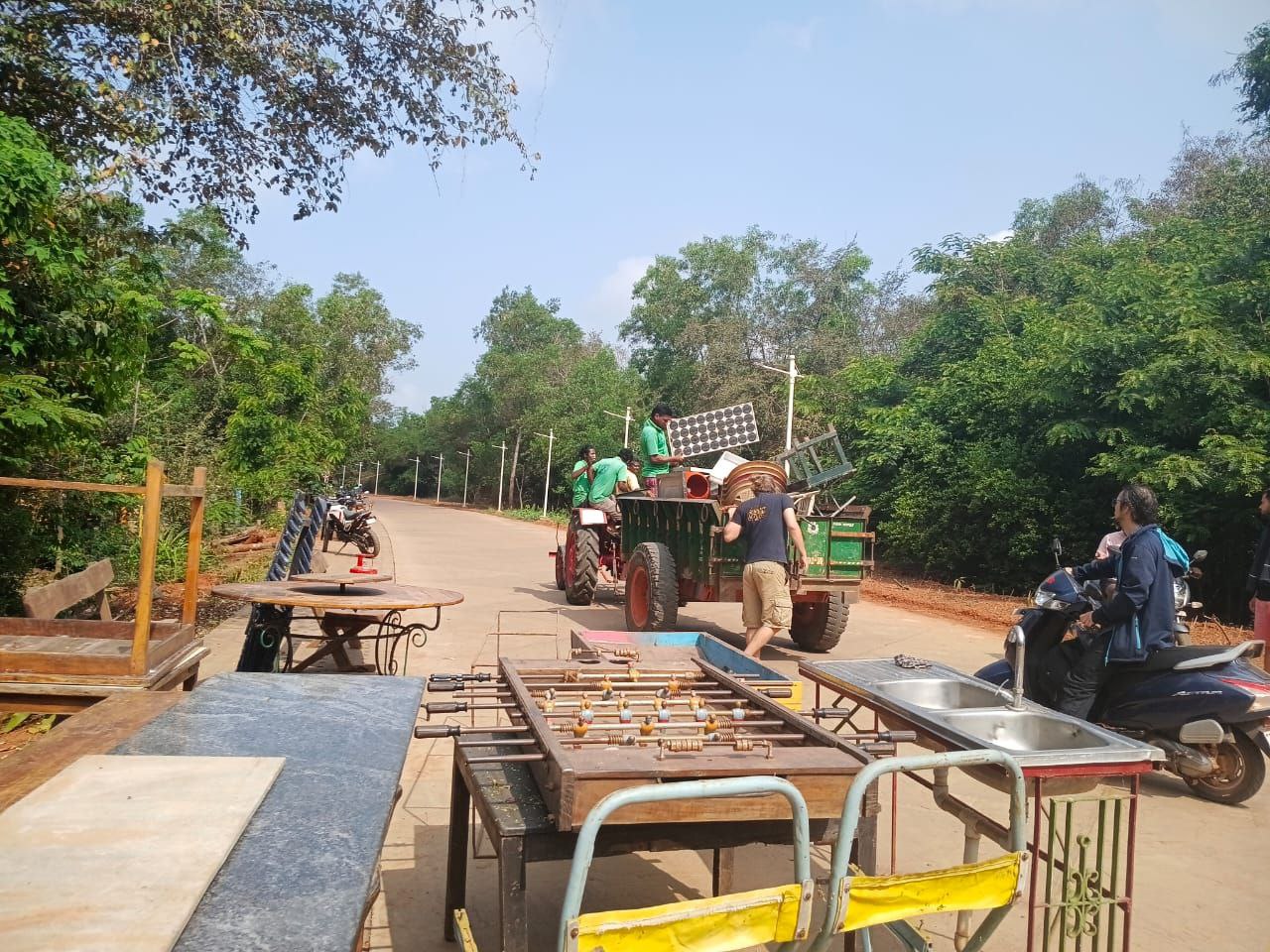
The group removed furniture and kitchen equipment, cut water pipes, and destroyed assets. A number of residents gathered to witness and stand in solidarity with the Youth Centre’s last inhabitants. An altercation then took place between Joel, Antim, and Sindhuja on one side, and two youths on the other. One youth had her phone snatched and was pushed to the ground by Joel for filming the scene; the other youth went to her defense and struck Joel. Both parties went to the hospital (where the youth were again assaulted), and subsequently filed police complaints. The Foundation Office’s appointees later described the clearing as approximately 90% complete, and announced that a new “Youth Learning and Training initiative” was being developed with Government of India support.
Complaints and witness accounts
The Working Committee of the Residents’ Assembly published a statement two days later acknowledging “a specific violent altercation” and characterising it as “an escalating sequence of actions from all involved”, with documented evidence of “verbal and physical provocation and several instances of violence on the side of those enforcing the destruction”. The statement condemned the violence “by anybody and everybody” and criticised “the impunity with which these persons representing the Foundation Office continue to threaten, aggress and evade any responsibility for their unacceptable and violent actions”.
Following the incident, the Foundation Office filed a police complaint against 27 people for allegedly obstructing the clearing operation. It also sent a blacklist of eight people to guest registration and security services, ordering that they be denied entry to Auroville. The Working Committee of the Residents’ Assembly instructed services to disregard the list in the absence of a formal written order from relevant Indian authorities.
On 27th March, an anonymous group calling itself “Auroville Child and Youth Protection” sent a detailed email to Indian authorities, Foundation Office appointees, and media outlets requesting an independent investigation, a safe testimony mechanism for residents, and a review of the Secretary’s reappointment. Several follow-up emails were sent in the following weeks, which led to the creation of a public report titled “Administrative Corruption at the Auroville Foundation”, accessible at https://aurovillefoundationrecord.netlify.app/. This was later accompanied by another webpage titled “Auroville Foundation: Named Accountability Record”, accessible here, which names explicitly those allegedly involved in the Youth Center takeover.
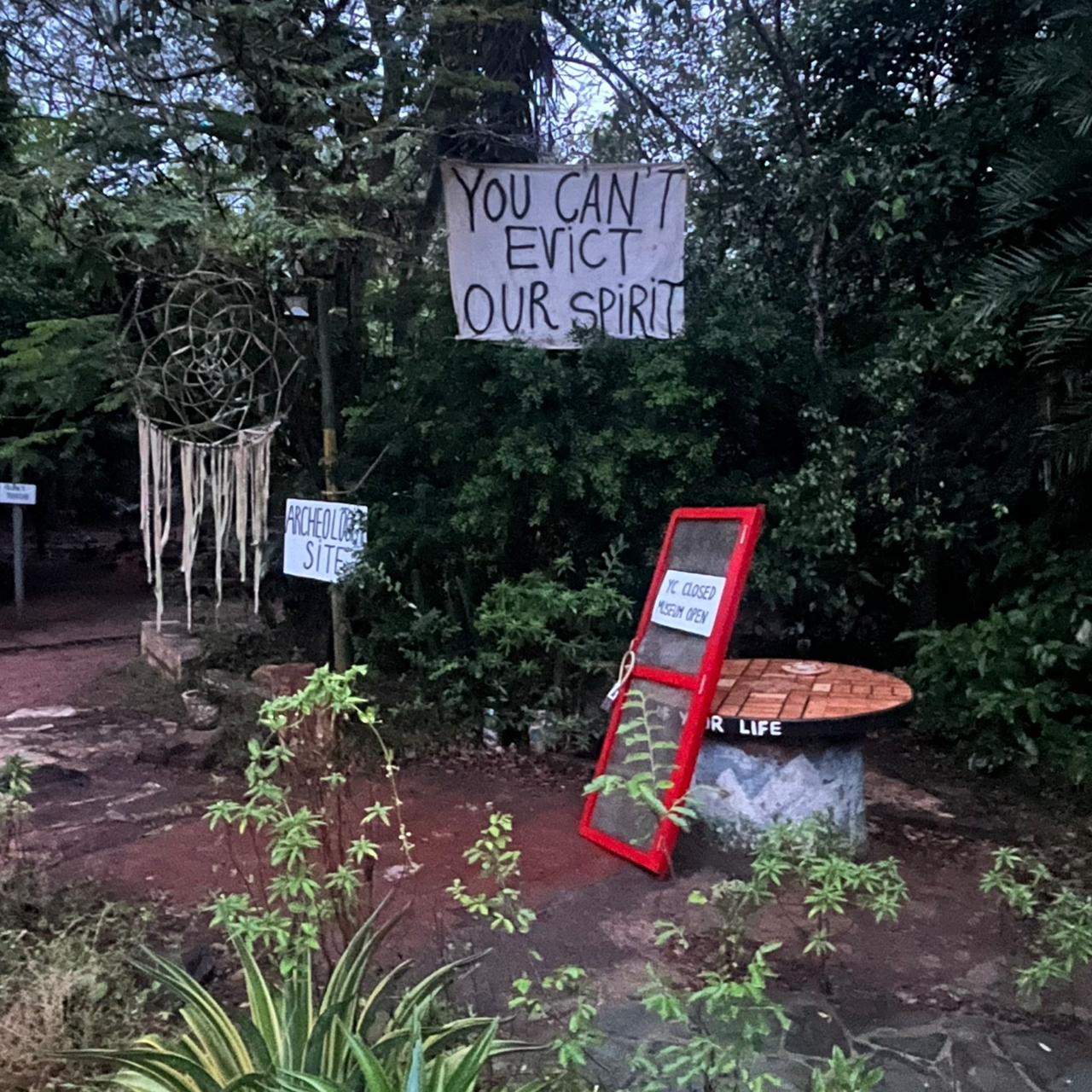
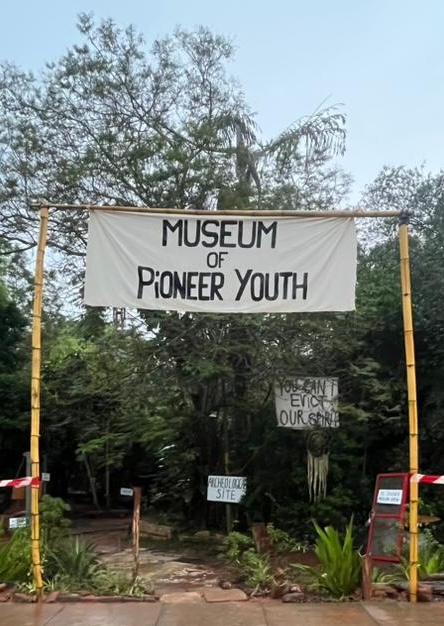
A Heritage Site Proposal
In response to the events of 20th March, a group of Youth Centre alumni created a proposal for the preservation of the former Youth Centre as a heritage site and a “Museum of Pioneer Youth of Auroville”. The proposal argues that the Youth Centre represents 30 years of living cultural memory: a space where young Aurovilians built their own environment from a virgin plot of land, mastered more than 20 trades, and developed a form of self-organised, barrier-free sociability that embodied Auroville’s founding spirit. The dossier proposes that this five-acre nucleus be preserved and integrated into the surrounding Cultural Zone, in an effort to de-escalate, prevent further destruction and to create “effective diplomacy” around the future of the former Youth Centre.
To bring public attention to the proposal, a guided tour and informal show were organised on 9th May 2026 by Akademik Genius Brothers and Genius Sisters, a long-standing Auroville comedic theatre troupe.
Access Denied in Matrimandir
On 28th April, Major Arun Ambathy (retired), an Aurovilian classified as “persona non grata” by the Foundation Office in October 2025, was refused entry to the Matrimandir compound by Foundation security personnel. Although he was ultimately permitted to attend a collective meditation with the support of fellow community members, Matrimandir executives indicated that such refusals would continue as his Auroville status was revoked by the Foundation Office.
Violence escalates: the Town Hall incident of 13th May
Access to the Auroville Council Room in the Town Hall, a workspace for elected working group representatives, had been guarded around the clock by community volunteers for three years before being forcefully reclaimed by the Foundation Office in early March 2026. Since then, elected working group members including the Auroville Council have been denied access to the room, while certain other groups, including the Light for Unity core group (a self-formed team of Tamil representatives), were permitted to continue using it under specific arrangements. It was during one such meeting of the Light for Unity core team and invitees on 13th May that a serious incident took place.
Appointees of the Foundation Office, including Antim, Sindhuja, Joel and Muriel, arrived claiming the room had been reserved for a Foundation Office meeting and demanded the group vacate immediately. According to witnesses present, Antim became verbally abusive without allowing any explanation. When Major Arun, who was attending the Light for Unity meeting, began filming the confrontation, Antim took his phone by force. A physical altercation followed in and around the corridor, involving several individuals on both sides. A glass was hurled against a wall. Police, security personnel, and an ambulance were called to the scene.
Both parties filed police complaints, and two Aurovilians – Antim Singhi and Major Arun Ambathy (retired) – were remanded in judicial custody the following day on 14th May. The matter is now before the courts. The Foundation Office’s appointed working groups issued a statement placing full responsibility on residents it characterised as “trespassers” and “agitators”. The Residents’ Assembly Working Committee, the Auroville Council, and the Light for Unity core group each issued statements condemning the repeated use of violence by Foundation Office appointees, and also called for calm, non-violent conduct, and responsible documentation of events.
Following the incident, a petition was circulated calling for Antim, Sindhuja, Joel, Muriel and Kaliananda to resign from their Foundation Office positions and to cease interfering in community affairs, citing a pattern of violence and abuse of power across multiple incidents over the past years. It gathered over 900 signatures in a few days. A community accountability form was also created by the residents’ documentation team, which invites residents to confidentially report instances of misconduct or abuse of power occurring within Auroville since June 2021.
Former International Advisory Council members speak out
The incident prompted a public statement from five former members of the Auroville Foundation’s International Advisory Council on 18th May 2026. The statement expressed deep concern over the “increasingly frequent use of verbal or physical violence in Auroville”, specifically naming incidents such as the takeover of Afsanah Guest House, the Youth Centre dismantling, and the Town Hall altercation. The former advisors further condemned the ongoing land exchanges as “opaque in nature” and called for a halt to all such transactions “until a transparent procedure beneficial to all has been worked out”. On the visa situation, they noted that more than thirty residents are currently without a valid visa, and stated that it was difficult to escape the conclusion that the withholding of letters of recommendation was tied to residents’ perceived compliance, adding that using visas as a means of intimidation “is reprehensible and diametrically opposed to Auroville’s ideals”. The statement concluded with a call for the rights and instruments of the Residents’ Assembly to be respected “as enjoined by the Auroville Foundation Act and by the true spirit of collaboration and human unity without which Auroville will cease to exist”.
Land Deals: The Losses Continue
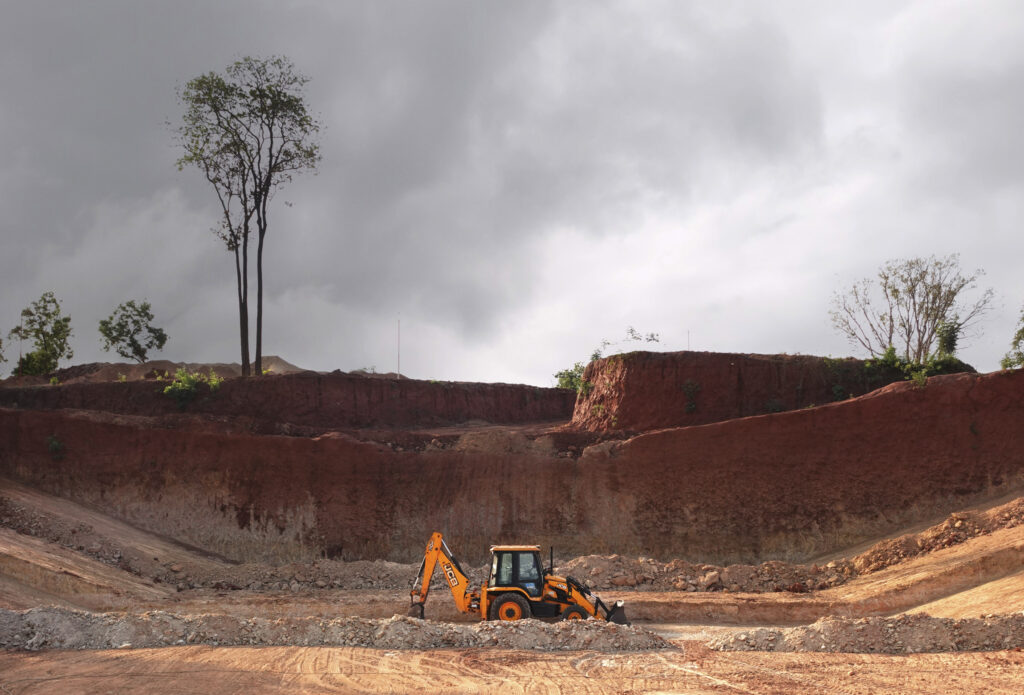
Since 2022, the Foundation Office has conducted a series of transactions in which Auroville land of high ecological or agricultural value has been exchanged for land of significantly lower financial value, much of it situated outside Auroville’s Master Plan area or in difficult-to-access locations. The Working Committee of the Residents’ Assembly estimates that these transactions have already caused losses exceeding 240 crore rupees (over US$25 million) to Auroville. It appears that funds donated by well-wishers for Auroville “land consolidation” are used to cover land exchange registration costs, meaning that community goodwill and charitable gifts are seemingly financing deals that reduce the value of Auroville’s collective land assets.
Auro Annam: a new exchange registered
On 7th April 2026, the Foundation Office registered a new land exchange involving approximately two acres of Auroville land known as Auro Annam, located right beside a national highway. The registration documents show that the Auroville land given away was formally valued at approximately 4.53 crore rupees (over US$475,000), while the land received in return was registered at only around 19.5 lakh rupees (less than US$21,000)—meaning the land Auroville relinquished was officially assessed at roughly twenty-three times the value of what Auroville received. The actual financial loss to Auroville is likely considerably larger because registered land values in India commonly understate actual market prices. As such, a police complaint filed on 28th April estimates the loss to Auroville in this exchange at approximately 26.5 crore rupees (over US$2.79 million), with a further three crore rupees (over US$316,000) in stamp duty and registration fees lost to the Government of Tamil Nadu. The transaction was conducted with two Puducherry-based land dealers, V Balasubramanian and L Naveen Karthikeyan. As with previous exchanges, no convincing explanation has been provided for why a transaction so financially unfavourable to Auroville was approved.
Eternity: fencing, relocation notice, and an appeal dismissed
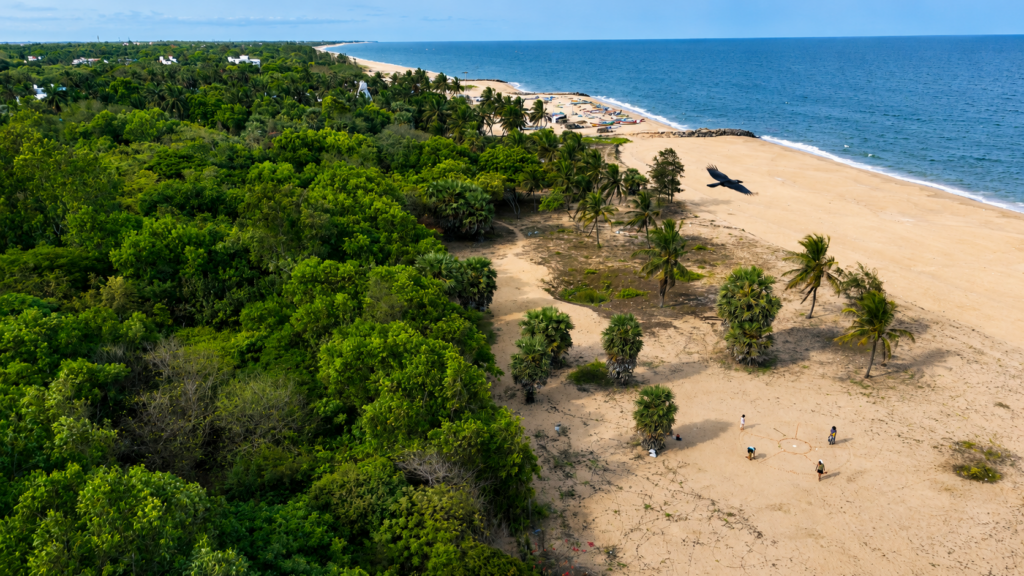
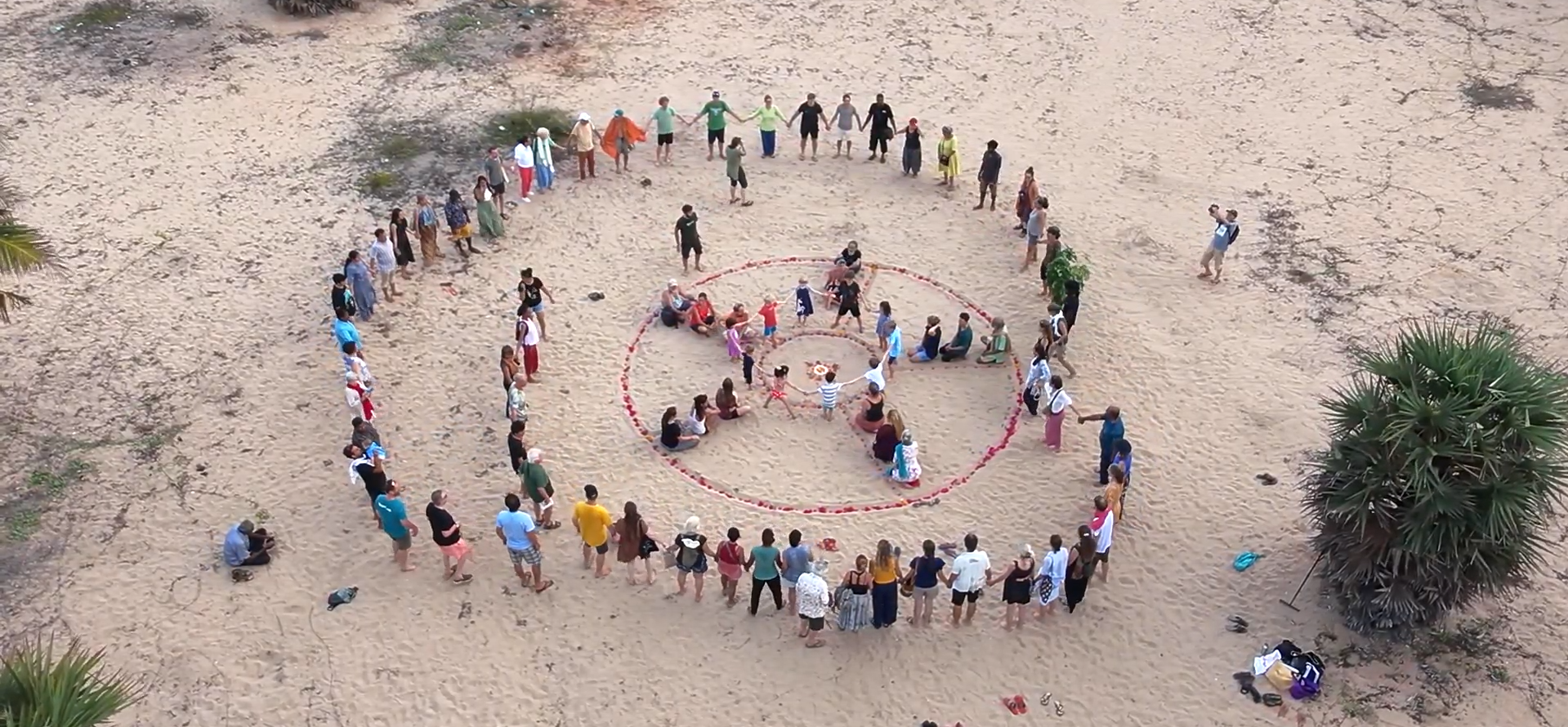
The situation at Eternity, a biodiverse coastal settlement, has continued to deteriorate. Since 1986, the land has been cared for by a resident family who transformed barren sand dunes into a lush forest, prioritising landscape protection, wildlife habitats, and sustainable building practices. They learned in late 2025 that the Foundation Office intended to exchange the entirety of Eternity land. In March 2026, their petition to the Madras High Court was dismissed on the grounds that the residents were deemed “permissive occupants” rather than legal titleholders. Soon after, Foundation Office personnel broke the lock at the site entry and began fencing the land. On 16th March, residents received a fourteen-day relocation notice. Eternity residents then filed an appeal against the dismissal of their earlier petition. Approximately 120 community members gathered at Eternity on 24th April to express solidarity.
In its judgment published on 1st May 2026, the court held that the Secretary of the Auroville Foundation retains independent authority over Foundation premises as Estate Officer, and directed her to issue a formal written decision. Days later, a Foundation Office appointee published derogatory social media posts that dismissed the value of almost 40 years of coastal regeneration and conservation work at Eternity.
Annapurna Farm valuable farmland lost: court petition dismissed
The Memorandum of Understanding (MoU) signed between the Foundation Office and the Indian Institute of Technology – Madras (IIT-M) has finally been circulated in Tamil media. The lease transfers control of 100 acres of Auroville’s most productive farm to IIT for a period of 33 years at no cost. Annapurna supplies approximately 30% of Auroville’s locally produced food, and processes 90% of the community’s grains. IIT-M allegedly intends to use part of the land to produce and test heavy electric vehicles, although the scope and specifics of planned usage are unclear.
The MoU contains a confidentiality clause that prohibits disclosure of its terms, which helps explain why it could not be obtained through legal channels. Notably, the Ministry of Education had already issued a “no objection” to the proposal in April 2024, more than a year before the transaction took place.
This sequence of events once again raises questions about decision-making made outside public scrutiny. No Residents’ Assembly body is party to the agreement; governance of any campus would rest solely with IIT Madras appointees and the Governing Board. Furthermore, the survey numbers cited in the MoU do not correspond to Annapurna farmland, raising concerns about accuracy and due diligence.
These discrepancies formed part of a police complaint lodged later by two residents concerning the legality of the lease: firstly, that the different survey numbers in the final registered deed constituted an unauthorised deviation; and secondly, that the deed was signed after the Governing Board’s term had expired on 6th October 2025, raising questions about whether any legally constituted body had the authority to approve the transfer at the time. The complaint calls for investigation into the decision-making process and whether any undue benefit or collusion was involved.
Discouraging Judgments from the Courts
The courts have delivered a series of setbacks for residents in recent months. The petitions brought by residents of both Eternity and Annapurna Farm were dismissed on identical grounds: that residents living on Auroville land are merely “permissive occupants” and hold no legal title. This reasoning has significant implications. It suggests that Aurovilians living on community land may be excluded from meaningful legal participation in decisions about the places where they live and work, despite decades of recognised residence, care, and contribution to the community through private funds and personal time and energy. This raises broader concerns about procedural fairness, transparency and accountability within Auroville governance.
A separate petition challenging the Foundation Office’s new “Residence Criteria”, introduced in November 2024, was also dismissed on 9th March 2026 following an interim stay granted in February. According to the court order, this dismissal is based on a March 2025 Supreme Court ruling on town-planning matters, which held that “the general superintendence, direction and management of the affairs of the Foundation vests in the Governing Board alone” and that “the functions of the Residents’ Assembly are confined only to advise the Governing Board in respect of the activities relating to the residents of Auroville”. This judgment had exceeded the scope of the case by ruling on the governance of Auroville beyond town-planning. The same March 2025 judgment characterised residents who had filed legal challenges as “disgruntled and discontented” and accused them of filing “ill-motivated petitions” to “hamper the development of Auroville”. These rulings represent a deeply troubling narrowing of the legal protections available to Auroville’s residents, and reflect a judicial interpretation of the Auroville Foundation Act that effectively excludes the Residents’ Assembly from meaningful participation in community governance.
Meanwhile, an appeal that has been adjourned many times — concerning the legitimacy of the Working Committee’s membership, the functioning of the Residents’ Assembly, and the principle of balance of powers among the three statutory bodies of the Auroville Foundation — is now scheduled for hearing in the coming months. This particular case is significant for clarifying the legal framework governing Auroville, with important implications for its future institutional functioning.
Tightening the Grip, Abusing Power
Facade: ceremonies, PR, and 'Prosperity'
While residents faced a series of disturbing actions, the Foundation Office’s official media arm “Auroville Media Interface” (also known as “Auroville Official”) has actively projected an image of a culturally vibrant, harmonious city, with frequent coverage of performances and festivals rooted in Indian classical and Hindu traditions. Control over cultural narrative is a recurring feature of institutional consolidation, which may help explain why Foundation appointees recently took over management of the long-standing community venue Cinema Paradiso via an order announced on 20th April, without explanation or prior notice.
The Foundation Office’s appointees also introduced plans for a new economic policy during this period. A subgroup identifying itself as the “Towards Prosperity Facilitation Team” conducted a survey and hosted meetings in February and March 2026 around themes of economic transition and collective wellbeing. Subsequently, the group produced a document describing an ambitious transition plan, framed in general terms without figures or measurable targets, and without acknowledging the significant negative impact that the Foundation Office’s decisions have had on the financial wellbeing of many Auroville residents and activities. No information was offered on how the facilitation team had been constituted, or on what basis it claimed authority to determine alignment with Auroville’s purpose.
New administrative controls
Two significant administrative directives were issued during this period, each further restricting the autonomy of Auroville’s working units. The first, sent in December 2025 to all unit executives, requires that any consultancy or
professional services offered by Auroville units to external entities must receive prior approval from the Foundation Office’s financial committee, with non-compliance treated as a breach of the 2024 Residence Criteria. At meetings in February and March 2026, unit executives raised serious practical concerns, noting that no approval process timeline had been specified and that the committee had been largely non-responsive to emails. For units dependent on short-lead contracts or freelance arrangements, such delays make routine operations difficult or impossible. The directive effectively gives the Foundation Office a powerful instrument of economic leverage over units’ economic activities and welfare, as legally-compliant units with active clients can be stalled through administrative delays or non-approval.
The second directive, circulated in March 2026, stipulated new procedures for the movement of all construction materials in and out of Auroville, requiring prior notification and a valid building approval certificate
for each transaction. Both measures mark a continuation of the shift from community-based self-organisation towards centralised bureaucratic oversight by unelected appointees.
Maintenance cuts and educational threats
On 10th April, the Foundation Office’s Budget Planning Team informed SAIIER, Auroville’s education and research body, that part-time and “half-maintenance” arrangements across all schools and sub-units would be discontinued from June 2026. No reason was given. SAIIER’s overall budget had already been reduced by one crore rupees (US$105,000) one year prior, forcing several full-time educators to accept reduced pay to keep schools functioning. Many Auroville schools depend on part-time teachers for curricula diversity, and educational units such as the Auroville Library and the Centre for Research in the Performing Arts rely on such arrangements. If implemented, the directive would place the continuity of multiple schools and cultural institutions at risk. The Auroville Council wrote to the Foundation Office’s financial committee requesting consultation with SAIIER, but received no response.
The Community and Its Supporters Respond
New working groups: renewed collaborative governance efforts go unrecognised
In February 2026, following an emergency referendum in which 830 residents participated, new representatives were selected for four Residents’ Assembly working groups: the Working Committee, the Funds and Assets Management Committee, the Land Board, and the Auroville Council. The Light for Unity group, which had initiated the process, had hoped that a newly appointed Secretary might recognise and engage with these groups as legitimate governance partners. However, Dr Jayanti Ravi was reappointed as Secretary for another year, with additional charge, and has not acknowledged the newly selected groups. Without access to financial service accounts, unit management records, or land transaction documents, the working groups’ capacity to exercise their mandate remains significantly constrained. Parallel structures of Foundation Office-appointed committees continue to operate alongside, and in competition with, the legitimately community-selected ones.
Gathering in solidarity
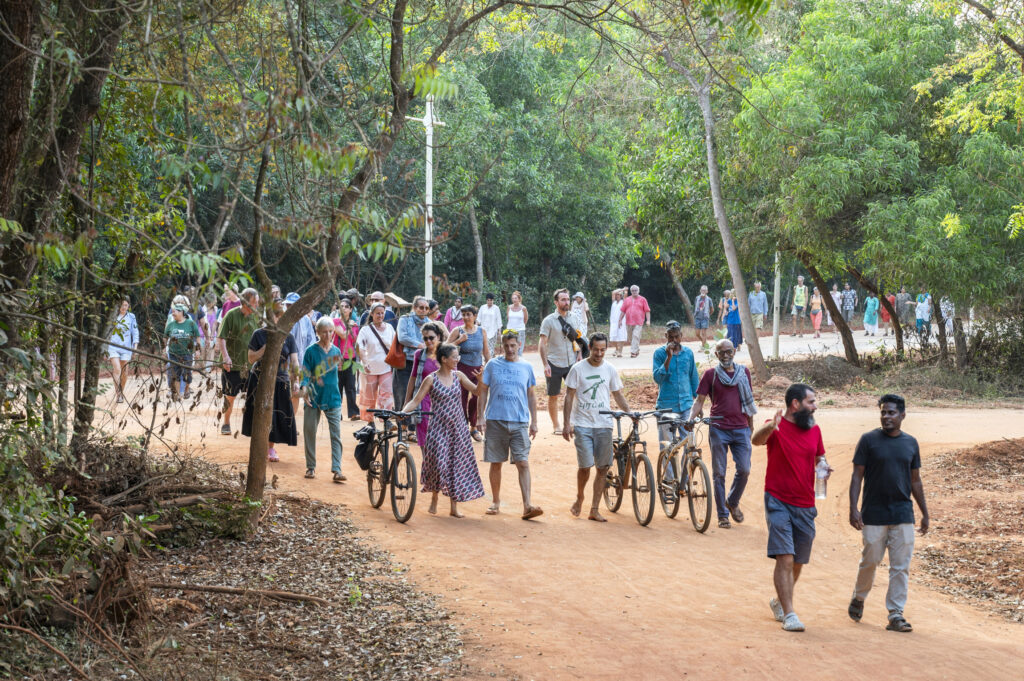
The Light for Unity core group, which played a central role in mobilising community action in late 2025 and early 2026, organised a Peace and Solidarity Walk on 13th March, attended by approximately 250-300 people. On 29th April, the group organised a collective meditation under the Matrimandir Banyan Tree as an expression of solidarity with the Residents’ Assembly, drawing over 100 participants. The gathering became a final communal moment of support before Daniel and Dariya’s departure under police escort later that evening.
Food System Envisioning
A group of Aurovilians is developing a new vision for food production and distribution within Auroville. Calling themselves the Food System Envisioning group, their March 2026 article presents their aspirations for a system that strengthens the connection between the community, local agriculture and the farmers of Auroville. Their work takes on particular significance given the ongoing threats to the sustainability of Annapurna Farm and the broader pattern of land loss.
New forms of expression
In the days following Daniel and Dariya’s deportation, new creative responses to the crisis have emerged. An Aurovilian released a song dedicated to their journey. On 10th May 2026, the first episode of a graphic novel series titled We Had A Dream was published online on the new auroville.love website: it reflects on what has been built and lost, while emphasising “what can still be reborn”. Both works are partly AI-assisted.
Activist Piyush Manush and the filing of formal complaints
A significant development in this period has been the growing involvement of Mr Piyush Manush, a Salem-based social activist with a wide civic and legal network across Tamil Nadu. Mr Manush has accompanied Aurovilians on visits to the office of the Superintendent of Police in Villupuram to file formal complaints against Secretary Dr Jayanti Ravi and former Governing Board Chairman RN Ravi, alleging corruption concerning land exchanges that have caused an estimated public revenue loss of up to 350 crore rupees (approximately US$37 million). He has used social media to highlight the opaque land transactions, the perceived lack of local police response, as well as the violence and lack of accountability at the Youth Centre and the Town Hall. He submitted approximately 200 pages of photographs and documentary material, noting slow investigative progress. His involvement has attracted other activists and legal advocates from across India, who are increasingly engaging with Auroville’s situation through broader civic platforms. This marks a shift in framing the issue beyond an internal community dispute, positioning it instead within wider questions of public and legal accountability, responsible governance, and protection of cultural and environmental assets.
Representing Auroville in Chennai
On 6th June, an event titled “Auroville: An Experiment Under Threat” was organised in Chennai by a group of Aurovilians with the help of Mr Piyush Manush. The organisers described it as “a day of reflection, dialogue, documentation, and discussion concerning recent developments affecting the international township”, and it was attended by over 300 people. The programme, held at Spaces in Besant Nagar, featured a photo exhibition, an art installation, and more than six hours of public conversation. With over 34 media interviews conducted, organisers hope the event will raise public awareness of the situation in Auroville and generate wider support from influential figures in Tamil Nadu. Further events of this kind are likely to be organised in the coming months.
A significant development in this period has been the growing involvement of Mr Piyush Manush, a Salem-based social activist with a wide civic and legal network across Tamil Nadu. Mr Manush has accompanied Aurovilians on visits to the office of the Superintendent of Police in Villupuram to file formal complaints against Secretary Dr Jayanti Ravi and former Governing Board Chairman RN Ravi, alleging corruption concerning land exchanges that have caused an estimated public revenue loss of up to 350 crore rupees (approximately US$37 million). He has used social media to highlight the opaque land transactions, the perceived lack of local police response, as well as the violence and lack of accountability at the Youth Centre and the Town Hall. He submitted approximately 200 pages of photographs and documentary material, noting slow investigative progress. His involvement has attracted other activists and legal advocates from across India, who are increasingly engaging with Auroville’s situation through broader civic platforms. This marks a shift in framing the issue beyond an internal community dispute, positioning it instead within wider questions of public and legal accountability, responsible governance, and protection of cultural and environmental assets.
The Auroville Global Fellowship's second report
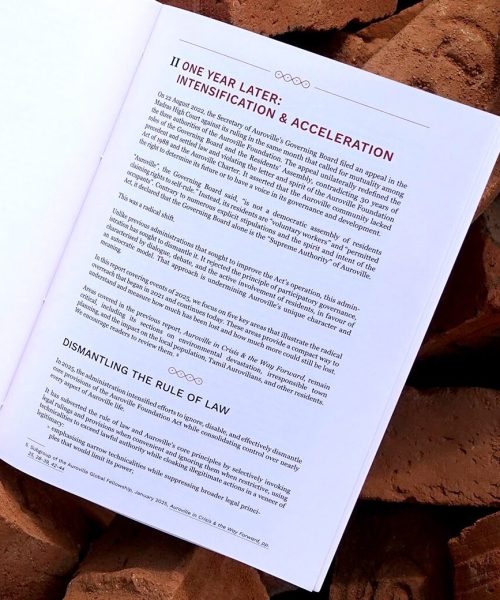
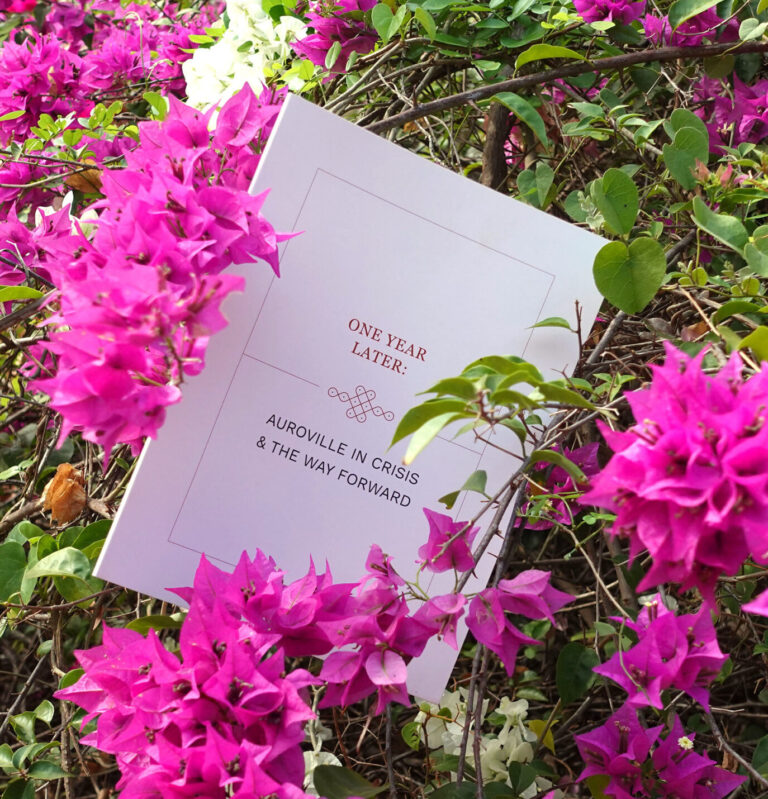
On 28th February 2026, a sub-group of the Auroville Global Fellowship, an international network of longtime supporters and former residents, published a follow-up report titled One Year Later: Auroville in Crisis and the Way Forward. The new report reviews five areas in which conditions in Auroville have deteriorated during 2025 and early 2026, and outlines possible approaches to resolving the crisis. It draws on government documents, legal filings, journal articles, interviews, and community publications. An executive summary of the report can be accessed here or by scanning the attached QR code. This 11th issue of Voices of Auroville also features a detailed interview with its primary author, David Wickenden.

Looking Ahead
As the first half of 2026 draws to a close, the situation in Auroville remains unresolved and in many respects has even worsened. No new Governing Board has been appointed, the Secretary’s tenure has been further extended until December (or until a full-time Secretary is appointed, whichever is earlier), and the recent court decisions have significantly narrowed the legal avenues available to residents. More Aurovilians have been forced out of the community through deportation, lack of visas, or newly restrictive policies, and the Youth Centre faces an uncertain future.
At the same time, responses within and around the community continue to evolve and deepen. A respected civil society activist has brought wider national attention to the situation in Auroville, including wrongful land transactions. The Auroville Global Fellowship’s second report, presented here, reflects sustained international engagement and offers proposals for a way forward.
The crisis in Auroville reflects broader patterns in which independent institutions, civic organisations, universities and NGOs are increasingly brought under centralised state administrative and political control. Auroville’s situation is distinctive in that it has long been upheld as an urgently-needed beacon of hope: an ongoing experiment in conscious living to show that people of different cultures and nations can build something meaningful and sustainable together. The stakes of its survival remain high, both for those who live there and for those who believe in what it represents.
We offer this publication in service to Auroville, its community, and its enduring spirit. The support of friends and wellwishers worldwide remains vital. Your awareness, advocacy, and practical support make a real difference in safeguarding this unique experiment for future generations. For ways to help protect Auroville’s vision and its people, please see “How to Help?” at the end of each Voices of Auroville issue.