
Holding the thread
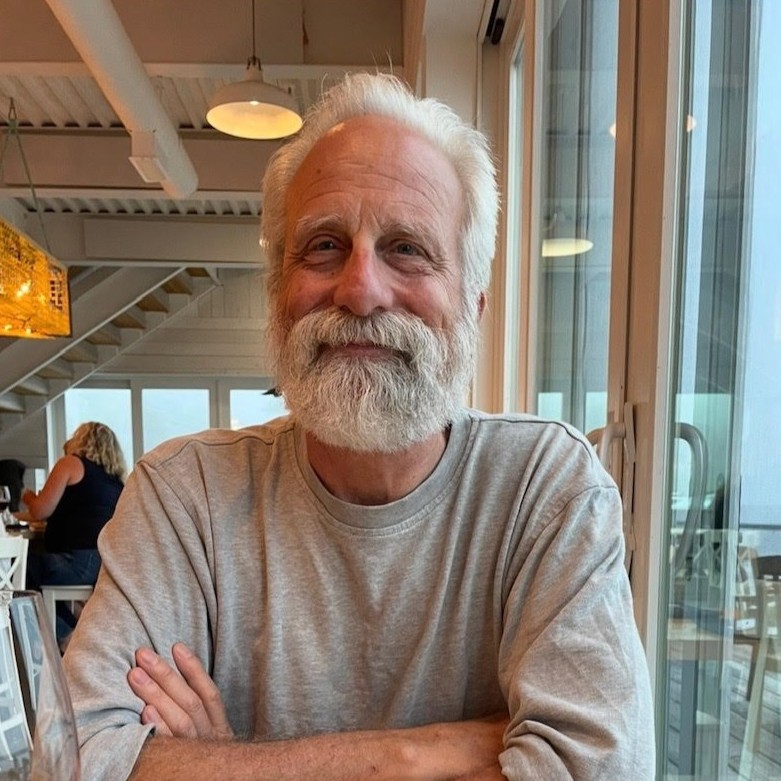
An interview with David Wickenden, May 2026
The Auroville Global Fellowship is an independent global network of more than 50 individuals from around the world who share deep ties to Auroville. The Fellowship was founded in 2024 and is unaffiliated with any Auroville institution. In January 2025, a subgroup published Auroville in Crisis & the Way Forward, documenting a governance crisis unfolding since 2021. One year later, they released a follow-up report finding that every issue had since intensified, and that India’s own Parliamentary Standing Committee had reached similar conclusions. Fellow David Wickenden, who served as primary author of both reports, answers our questions.
To start, could you tell us a little about yourself and what first brought you to Auroville? How did you contribute to Auroville’s life?
I discovered Sri Aurobindo while studying Indian philosophy and yoga at university. The moment I heard about Auroville, I knew I had to go. I lived there from 1975 to 1983. Back then, everyone did a bit of everything: worked on the Matrimandir, planted trees, worked in the kitchen, whatever needed doing. I got involved in education, edited grant proposals, helped start Auroville Notes (now Auroville News and Notes) and helped launch a short-lived magazine, the Auroville Review. It ultimately failed, but a few years later, from the ashes, Auroville Today emerged with a talented new team and a strong mission.
After you left Auroville, where did your journey lead you, and what kept you busy?
I followed the trail of communications and strategy and learned a lot. I worked for a large international news organisation and a global strategic communications consulting firm, and ultimately became head of corporate strategy at that firm and at a large American non-profit. It was all training and karma yoga. I never lost my inner connection to Auroville or to Sri Aurobindo and the Mother. That’s been with me always.

Even living far away, how has Auroville shaped how you see the world and your work? Did you keep an active connection with Auroville and its on-the-ground reality?
Auroville’s mission, vision, values, and work are central to my life. Auroville is at the forefront of humanity’s struggle to evolve higher consciousness in the face of enormous resistance. It’s an essential node whose integrity we have to fight to protect. Not just for its own sake, but also for the planet and humanity.
I keep in touch through the news channels and the diaspora of friends, supporters, and residents. Authentic community news channels like Voices of Auroville are essential.
When were you invited to the Auroville Global Fellowship? Why did you accept the invitation?
I was contacted as it was getting started. I accepted immediately because I’d felt for a long time that there was a need to knit together the global diaspora in a thoughtful way to support the Auroville community and each other. The Fellowship is just a start. There’s much more to be done to connect people in dynamic ways that can make a positive difference.
You were one of the authors of the Fellowship’s first report, Auroville in Crisis and the Way Forward. In February 2026 the sub-group released its follow-up report, One Year Later, of which you are the primary author. Who was involved and how did you work together?
It’s important to emphasise that this has been a collective effort. Many people who follow what’s happening carry Auroville in their hearts and stand in solidarity with the community. I may have “held the pen”, but more than twenty people from America, Europe, India, and Asia-Pacific contributed ideas and hands-on work over many months.
There’s a shared perspective and understanding and an aspiration to help. Online meeting tools have made a huge difference, as have others like Google Docs. I’ve long since lost count of how many online meetings, discussions, emails, and editing sessions we’ve had!
A year on, what had changed in Auroville that made you feel a second report was necessary?
The situation was clearly getting worse. It was alarming and distressing. All of the issues we’d highlighted in the first report were intensifying and accelerating — metastasising. We felt that more was needed to draw attention to what was going on, to help people understand the reality, its impact on Auroville residents, and the implications for the future. We felt the need to create a historical record of the truth in the face of a deliberate effort by the administration to falsify and erase Auroville’s history.
Given all the bad news from Auroville, why should those who love Auroville but feel overwhelmed actually read the report?
It is overwhelming! It’s painful. It’s stressful. It’s difficult. It’s hard to grasp the bigger picture, and even harder not to feel discouraged and helpless, facing a firehose of discouraging news and disinformation being pushed out by the administration. There’s a temptation to look away, to compartmentalise, shut down, deny.
The report should be read because it gives the big picture and shows how positive change is possible with specific suggestions. By connecting the dots and identifying patterns, it seeks to build a stronger framework for shared understanding and action.
Difficult truths must be confronted if we’re to reach a deeper level of understanding and, ultimately, transformation. Hard as One Year Later may be to read, it’s important for that reason, and to show that there are ways out of the current situation if the administration has the will to do so. We hope as many people as possible will read and share it.
Who is the report addressed to, and what are you hoping to achieve by it?
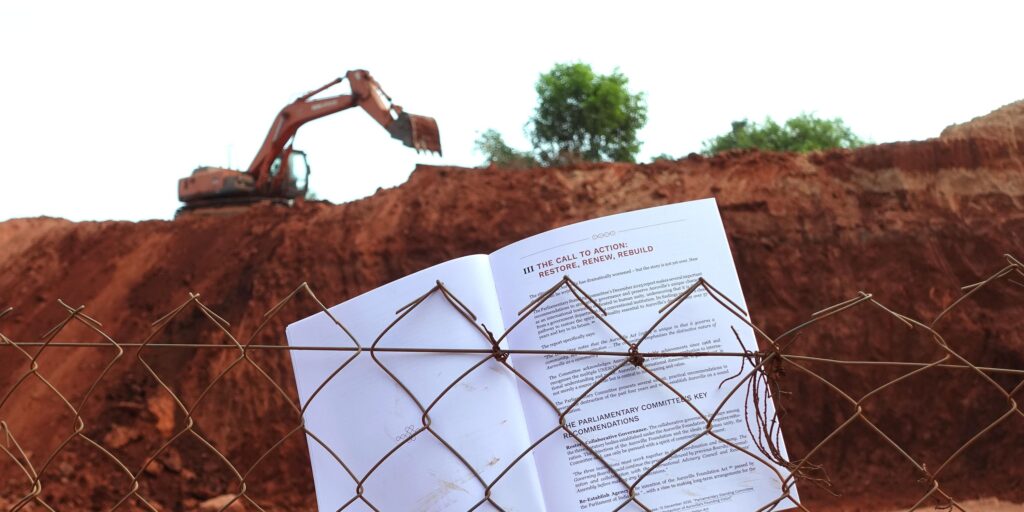
It’s addressed to government officials, parliamentarians, thought leaders, and people of influence in India. But it’s also addressed to Auroville residents, supporters, the international community, and everyone of goodwill who feels a connection with Auroville.
The aim is to increase visibility, create a shared understanding, and spark positive action to restore collaborative governance and operational balance as laid out in the Auroville Foundation Act, and to reestablish the core values identified in the Charter and in the many comments the Mother wrote and made about Auroville. That is not to say the community can or should return to the past, which was far from perfect. Rather, we should learn from and build on this experience to emerge with a new level of understanding and action, with a re-commitment to essential principles and practice.
What would a genuine course correction actually look like in practice? Do you personally still believe this situation can be turned around?
Yes, of course it can be turned around, and it must be turned around! The two reports outline specific steps to achieve that. Several are highlighted in the Parliamentary Committee report as well. They aren’t complicated. What’s needed is understanding, goodwill, and constructive action from the central government, a new Governing Board, and a new Secretary. A fresh start on a different footing.
One practical step toward a course correction would be for the Ministry of Education to appoint a new Governing Board with members who meet the criteria set forth in the Auroville Foundation Act, and who are committed to working collaboratively with the residents, along with a new International Advisory Council, which, as required by the Act, also needs to be appointed. That, as well as appointing a new Secretary who truly understands Auroville’s unique character and is committed to supporting its development in harmony with all stakeholders, would go a long way towards reestablishing necessary trust, harmony, and enthusiastic participation.
What can members of the community, near and far, do to help improve the situation in Auroville?
Keep the faith, stand and speak up for what’s right. History shows that many seemingly hopeless situations have been overcome through smart, determined, collective action sustained over time. Restoration and renewal can emerge from the crucible. The call now is to resist injustice, corruption, and falsehood. Our most important action is to do our inner and outer work as an offering, with aspiration, sincerity, and surrender.
As a practical matter, many individuals and groups in Auroville need material support. There are ways for people outside Auroville to help. Many people contributing a little can make a big difference. Within Auroville, the community needs to keep exercising its “superpower” of building networks of care: mutual aid, resource- and information-sharing, protecting, and “neighboring”. And of course to continue documenting, calling out, and bearing witness.
We should never underestimate the power of standing up for spiritual values in the face of moral corruption and injustice. That is upholding the dharma.
How do you respond to those who question whether people living abroad should be commenting on Auroville’s internal affairs?
What’s the first line of the Auroville Charter? “Auroville belongs to nobody in particular. Auroville belongs to humanity as a whole.”
Everyone is deeply mindful of the Indian government’s unique and essential role in supporting Auroville’s vision becoming a reality on its soil. But Auroville is also a universal township. Everyone in the world who values its meaning and purpose has a stake in its wellbeing. Each of us, in our own way, wherever we live, is a steward of its values and purpose. To me, that means the global community not only has a right but also a responsibility to speak up about what’s happening, express concern for its future, and do what we can to uphold its intentions and ideals.
Do you still have hope and faith in the future of Auroville, both its physical manifestation and its ideals?
I’m never without hope and faith! The Mother has planted a seed in Auroville that will surely flower, no matter what the forces of resistance are. We need to take the long view while dealing with the current situation.
Yes, there are moments of despair and hopelessness. But there are also the teachings of Sri Aurobindo and the Mother to shed light and offer strength. Everyone should read Gilles Guigan’s two-volume collection, Auroville in Mother’s Words.
None of us can pretend to see the future, but we can and must aspire, work, and trust every day toward the victory of the Truth. Above all, we can work to the fullest extent of our personal capacity to realise that victory within ourselves and, in whatever external ways we can, within the community and the world outside.

In conversation with Myosotis Sylvatica, May 2026
This article was first published in Voices of Auroville, Issue 11