
Summary – October 2025 to January 2026
The aggressive takeover of Auroville – initiated more than four years ago with the appointment of a new Governing Board and its Secretary, Dr Jayanti Ravi – shows no signs of slowing. Previous issues of Voice of Auroville have covered events through September 2025, a summary of which can be accessed at www.auroville.media/crisis.
The period from October 2025 to January 2026 presents a stark contrast: while the Residents’ Assembly’s concerns received significant recognition in a Parliamentary Standing Committee report, authoritarian measures intensified, including the first expulsion of an Indian resident as persona non grata, forced closures of independent media bodies, and the seizure of more community spaces.
Although the Governing Board’s four-year tenure concluded in October 2025, the Office of the Secretary (also known as the Foundation Office) continues to tighten control over residents’ lives, disregarding both Parliamentary recommendations and legitimate community governance structures and decisions. As the community awaits the appointment of a new Governing Board in line with the Auroville Foundation Act, residents have responded to the tightening control with renewed resilience and the selection of new working group representatives.
Parliamentary Recognition of Residents' Concerns
A Significant Acknowledgment
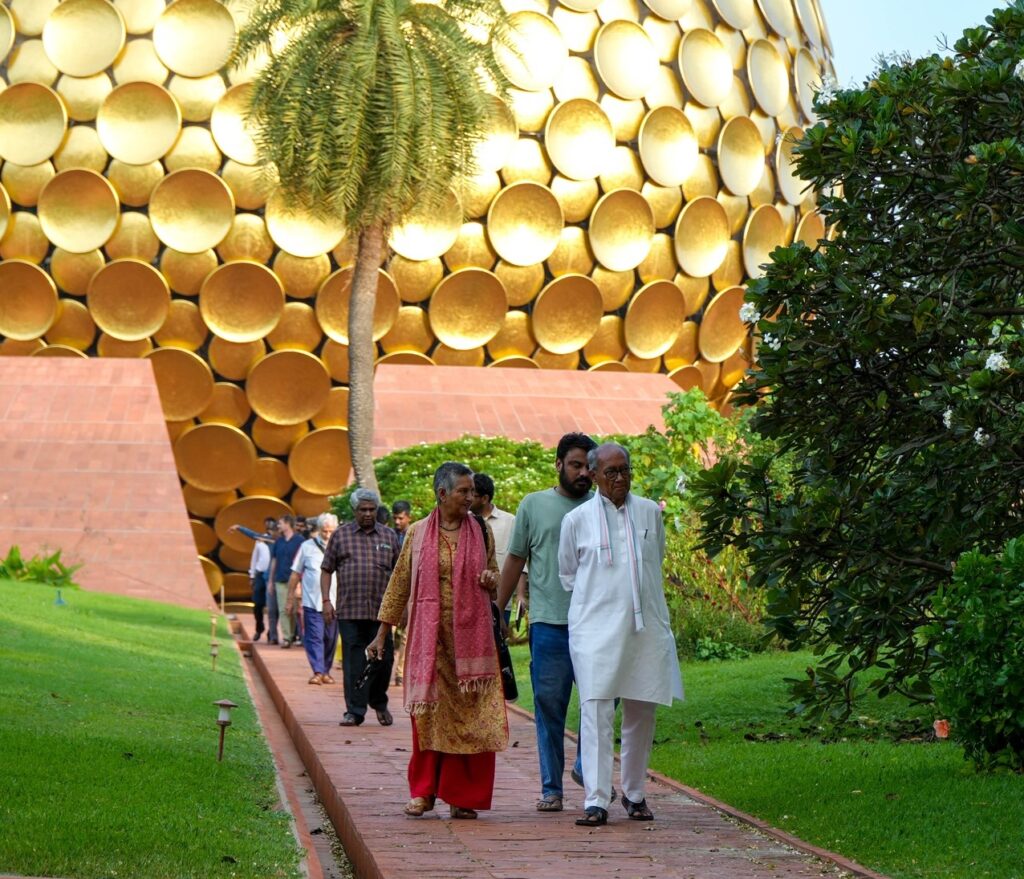
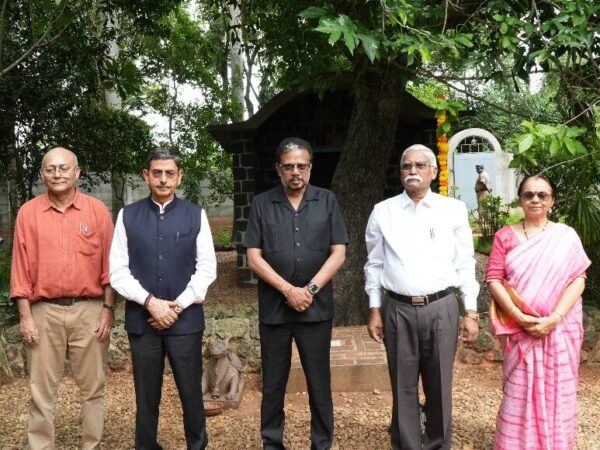
On 8th December 2025, a potentially significant development emerged with the release of a Parliamentary report reviewing the Auroville Foundation, among other autonomous bodies under the Ministry of Education. Issued as the 371st Report of the Department-Related Parliamentary Standing Committee on Education, Women, Children, Youth and Sports — chaired by Rajya Sabha member Digvijaya Singh and comprising 31 members from across both Houses and all political parties — the report advances several recommendations long articulated by the Working Committee of the Residents’ Assembly. While the report is advisory rather than legally binding, it represents the most significant external validation of residents’ concerns since the crisis began. The report’s recommendations, if followed, would signal a decisive shift away from the authoritarian governance approach taken by the Foundation Office since late 2021.
Key Recommendations
On governance and decision-making, the Committee emphasised “the distinctive nature of Auroville as a community” and noted that “the Auroville Act (1988) is unique in that it governs a community, not just an institution”. As such, the Committee affirmed that the Residents’ Assembly, the Governing Board, and the International Advisory Council “must work together in close coordination and harmony” and that key decisions should be made through “consultation and collaboration”. Crucially, the Committee underscored that “an empowered Residents’ Assembly is critical” as it is “the only statutory body capable of representing the residents of Auroville”.
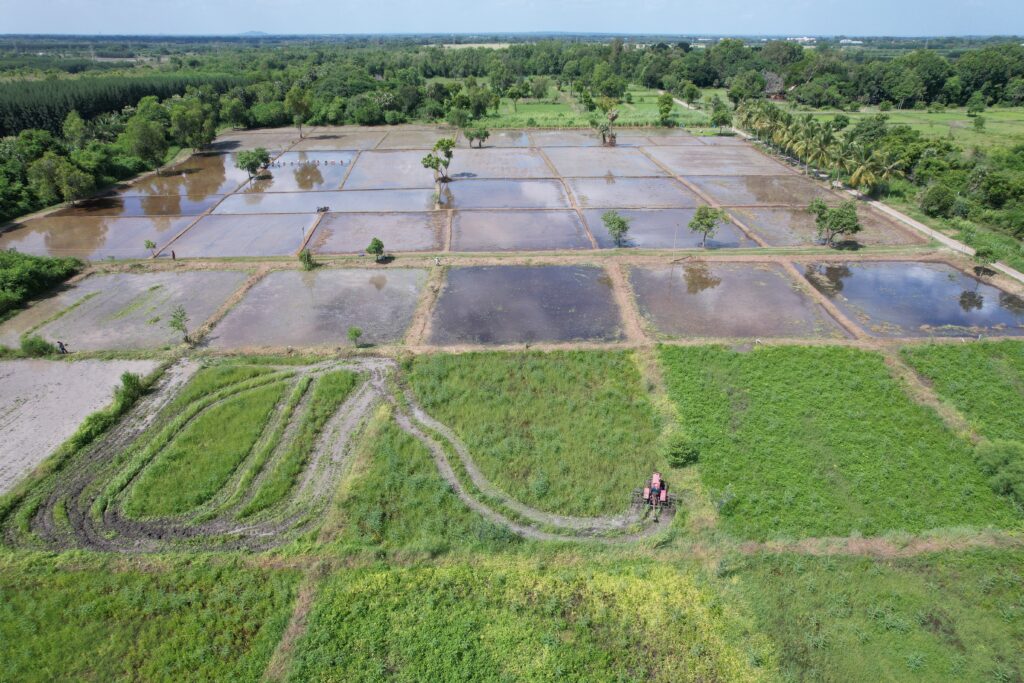
Regarding the highly disputed IIT Madras campus proposal on Annapurna Farm, the Committee explicitly recommended that the farm “should not be disturbed and alternative sites should be found”. This recommendation affirms the concerns long raised by resident bodies and farm stewards, who have argued that destroying Auroville’s most productive farmland for an external institutional campus would undermine the township’s commitment to food sovereignty and sustainable living. For further details, see the section below: “Annapurna Farm: Parliamentary Support Amid Ongoing Threats”.
On Master Plan implementation, the Committee called for close consultation with the Residents’ Assembly and stakeholders, noting that changes should be made as required, and that all land transfers “should be implemented in full transparency and consultation with all stakeholders, including the Residents’ Assembly and the International Advisory Council”.
Most significantly, it recommended that any amendments to the Auroville Foundation Act (1988) and the Auroville Foundation Rules (1997) should be developed through “a consensual process, with the unanimous support of all the three statutory bodies”, directly responding to the Governing Board’s stated intention to pursue amendments without meaningful consultation.
The Committee also emphasised that Auroville’s international character is “not just a matter of pride, but is the very intent of Auroville”, and recommended speedy visa processing, with five-year visas “as the norm for all residents”. It further advanced minimising the role of the Central Public Works Department and other external bodies, in recognition of Auroville’s long-standing tradition of self-direction.
A Way Forward?
Members of the Auroville community and the Working Committee of the Residents’ Assembly gratefully acknowledged the engagement of the Chairman of the Parliamentary Standing Committee during his visit to Auroville and Annapurna Farm, welcoming the report as “a reasonable, positive and appropriate way forward”, and indicating their readiness to support and collaborate on its implementation.
Whether these recommendations will be heeded remains uncertain. The Secretary Dr. Jayanti Ravi has received another one-year extension, and to date, the Foundation Office has shown little intention to modify its approach despite repeated calls for consultation from residents, the International Advisory Council, and now one of Parliament’s own Standing Committees.
End of Governing Board Tenure
The 70th Meeting
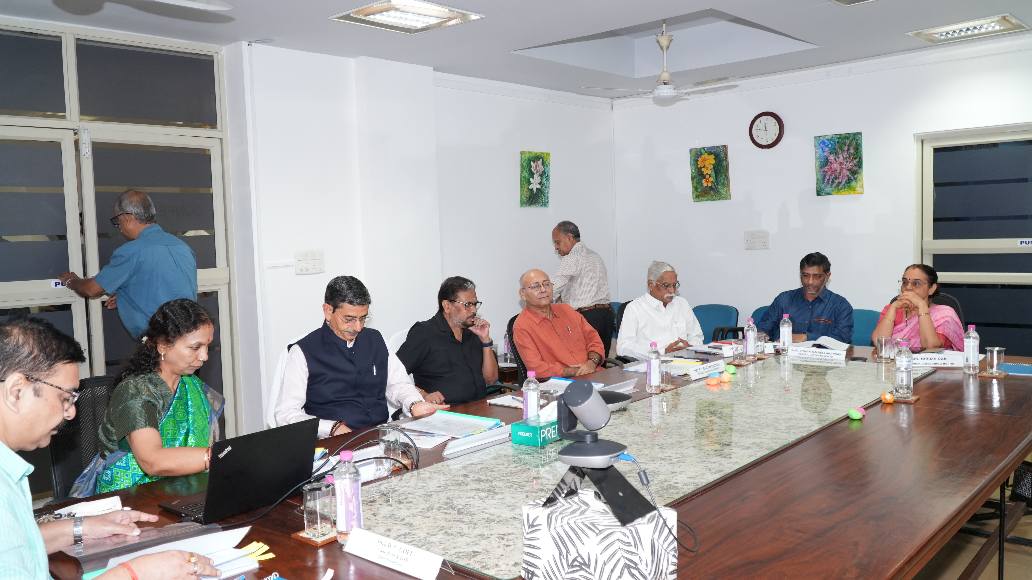
The Governing Board held its 70th and final meeting on 1st October 2025 at the Auroville Foundation office building, marking the conclusion of their four-year tenure. In keeping with the secrecy that has characterised their term, outdated information of the meeting emerged only through media reports.
In his opening remarks, Chairman R.N. Ravi characterised the Board’s tenure as a period of “course correction” and expressed satisfaction with progress made on infrastructure development and the formalisation of rules and regulations. The report stated that without the Governing Board’s “undaunted support against all challenges and accusations, it would not have been possible to resurrect Auroville to its pristine glory and international status”.
The Board collectively thanked Dr Jayanti Ravi for her service as Secretary. Although her one-year extension was due to conclude in December 2025, her term has since been extended again on an interim basis, either for another year or until another full-term Secretary is appointed.
Questionable Legacy
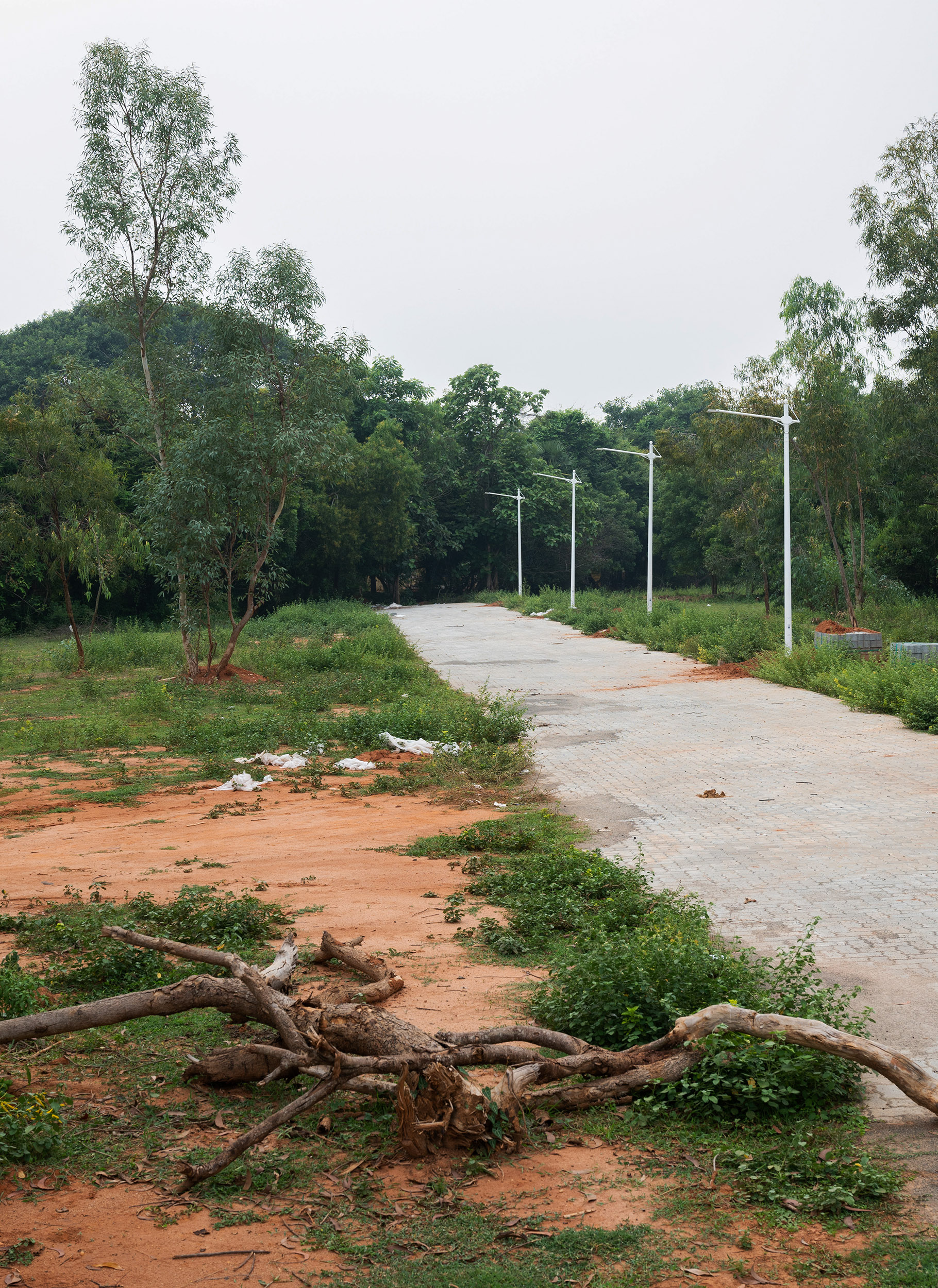
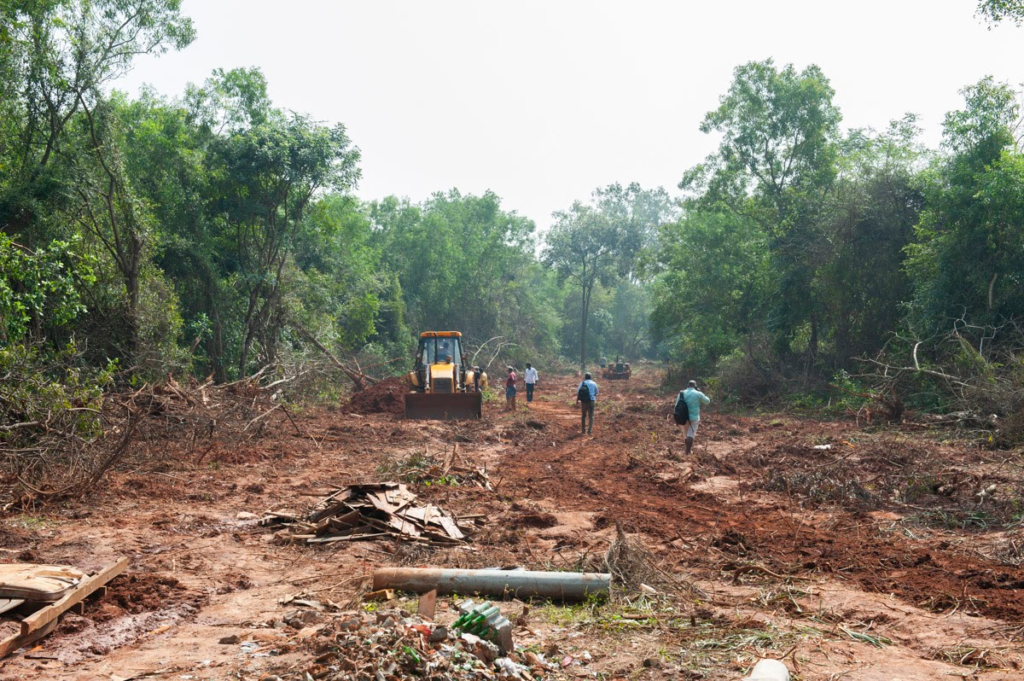
While the Governing Board expressed satisfaction with infrastructure progress, many residents conversant with reality on the ground contest this assessment. Over the Board’s four-year tenure, it seems the only completed infrastructure project has been installing an elevator costing around 55 lakh rupees (approx. 60,000 USD) at the Town Hall. Although multiple new projects have been announced, and land was cleared of trees at several sites including areas near the Town Hall and existing communities, nothing was actually built. Numerous roads were begun but remain incomplete, leaving a landscape of unfinished projects.
The partially constructed roads themselves are a significant downgrade from earlier Auroville standards. They carry a substantially higher carbon footprint due to the use of concrete and imported materials, encourage much higher speeds due to lack of speed regulation mechanisms, and create safety hazards with rougher, more slippery surfaces that increase accident risk. The wider roadways have also destroyed established cycle paths, offer less shade for pedestrians and cyclists due to the removal of mature trees, and limit water percolation, contributing to increased flooding during monsoon seasons.
Significant community funds have been directed towards projects of questionable value: Mother’s Flower Garden (with a budget of 12 crore rupees or 1.3 million USD); a proposed “Toy Train” for the Kindergarten zone; and a tender for a Virtual Reality Museum. Along the Crown Road between Kalpana and Santé, precious shade trees were removed and replaced with grass lawns and ornamental plantings — glaring changes that prioritise aesthetics over ecology and everyday practicality.
Centralised Authority Approved
The most concerning outcome of the 70th meeting was the Board’s move toward further centralisation of authority, granting the Secretary final decision-making power over the reconstitution of all residents’ working groups, committees, units, trusts, and entities. While existing group members may nominate new members and resource persons, the Secretary is authorised to make final decisions “in the interest of the Auroville Foundation”, marking yet another step in the erosion of participatory governance structures built by residents over decades.
The Board also approved new “Procedures for engagement and functioning of the Residents’ Assembly”, though no details have been shared with the community. This raises serious concerns, as the Auroville Foundation Act establishes the Residents’ Assembly as an authority equal to the Governing Board, not subordinate to it. Any attempt to redefine its functioning appears to conflict with the Act’s framework of collaborative governance.
Residents have raised concerns about the steady stream of new administrative directives issued without clear implementation plans, as well as the continued lack of meaningful communication from the Foundation Office and its appointed committees.
Escalating Threats to Residents
Threatening Notices and Contested Appeals
During this period, the Foundation Office’s Admissions and Terminations Scrutinising Committee continued targeting long-time Aurovilians and Residents’ Assembly working group members with threats of removal from the Register of Residents and eviction from Auroville. Among those affected are all the resident-elected members of the Town Development Council and Working Committee, and many senior pioneers of Auroville.
To date, 39 residents, including individuals awaiting visa renewal, received notices giving them 14 days to respond to allegations or face removal from the Register of Residents. The Working Committee of the Residents’ Assembly described these letters as “filled with baseless accusations, written in a tone that is hostile, intimidating, and devoid of humanity”.
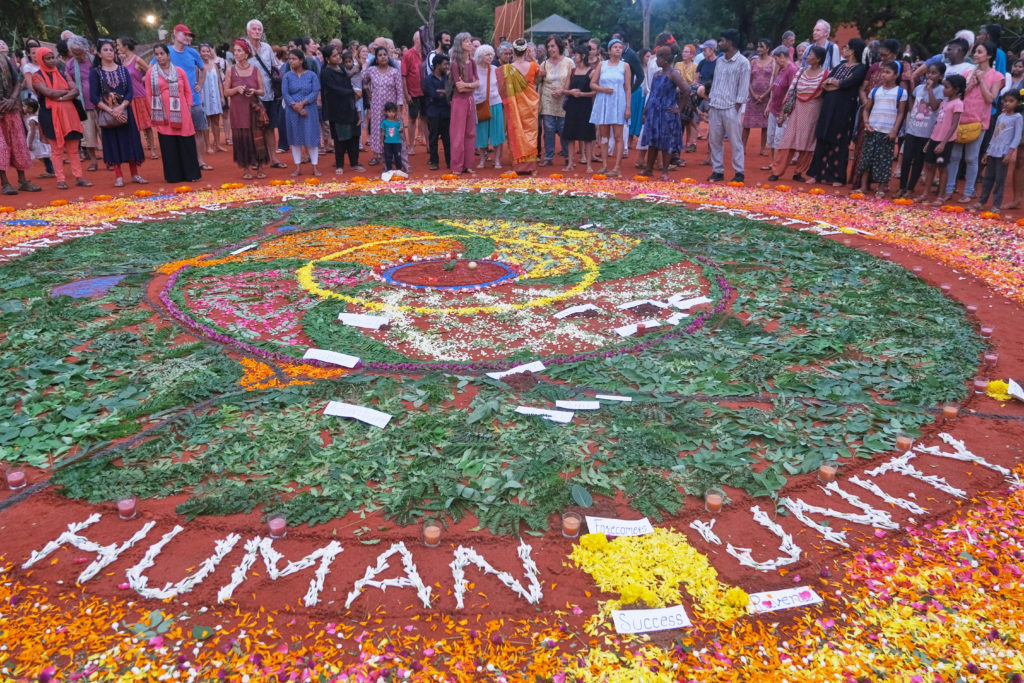
The majority of those targeted are international Aurovilians who rely on entry or business visas to remain in the country, and who have been openly critical of the Foundation Office’s actions and methods. In response, residents circulated an open letter that received broad community support, objecting to the intimidating tone of the notices, and calling for respectful engagement in line with Auroville’s founding ideals of human unity.
In September 2025, shortly before the end of its tenure, the Governing Board constituted an “Appellate Committee” to hear appeals against residents’ terminations of Auroville status and removals from the Register of Residents. The committee was composed entirely of Governing Board members, the same body responsible for the widely contested decisions under appeal, creating an inherent conflict of interest in the appeals process.
The First Indian Resident Formally Expelled
On 28th October 2025, the Foundation Office took the unprecedented step of formally declaring an Indian resident of Auroville persona non grata for the first time, citing the Residence Criteria Standing Order of 2024 (see Voice of Auroville Issue 08 and Issue 09).
Major Arun Ambathy (retired from the Indian Army), confirmed as an Aurovilian by the Residents’ Assembly Entry Board in April 2025, was barred from entering or residing in Auroville. Residents and services were instructed not to engage with him “in any capacity”, and the Auroville Security Service was instructed to enforce “strict compliance with this directive”.
This marked a sharp escalation in the Foundation Office’s use of coercive authority. Since arriving in 2018, Arun has worked in reforestation at Revelation Forest. He is a vocal supporter of the Residents’ Assembly, and is highly engaged with the local Tamil community. He has repeatedly raised concerns about unauthorised activities, including soil mining, inter-state soil transport, and unpermitted tree felling of protected species — actions that led to three official state government complaints against the Foundation Office, and intervention by the Collector’s office and the Forest Department. He also supported forest workers seeking unpaid gratuities after their dismissal.
Residents have since launched a petition opposing the Foundation Office’s decision to declare him “persona non grata”.
Impact on Auroville's International Character
Ongoing pressure from the Foundation Office on visa-dependent Aurovilians since 2021 has significantly dampened international interest in joining Auroville. Between June and August 2025, non-Indian entrants comprised only 23% of those entering through the Residents’ Assembly Entry Board process, and only 30% via the Foundation Office’s own admissions committee. Despite the lack of exact figures, it is widely acknowledged in the community that many international Aurovilians have left over the past four years given mounting challenges to secure visas and sustain livelihoods. This steady erosion of Auroville’s international character stands in direct contradiction to the Parliamentary Standing Committee’s observation that internationalism is a defining principle of Auroville that lies at the core of its purpose and founding vision.
Media Censorship Reaches New Levels
The Forced Closure of Auroville Today
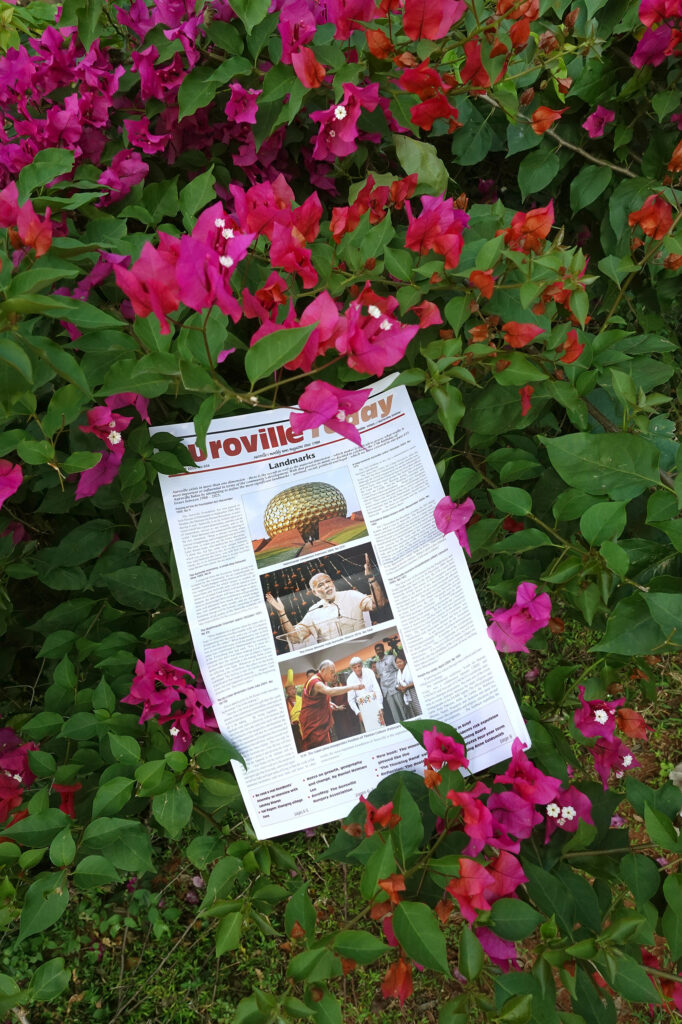
In November 2025, Auroville’s independent monthly news magazine Auroville Today, operating since 1988, announced it was ceasing operations. The closure came in response to a new Media Policy approved at the Governing Board meeting in December 2024, which was belatedly released to Aurovilians in November 2025.
The editorial team was informed in a meeting that all Auroville media would henceforth function under one “Media Hub” designed to “unify how Auroville represents itself to the world and to foster a positive image”. The long-standing editors of Auroville Today, widely respected for their nuanced reporting on events in Auroville over the decades, decided they could not function under a policy that contradicts their core values of honest reporting on “the messiness of Mother’s experiment”.
The editors also noted that a substantial donation earmarked for Auroville Today had not been released for some time, hampering their operations and responsibilities towards donors. To mark its closure after 37 years, the magazine made its final issue freely available to readers.
The Contradiction of "Alignment"
The Foundation Office’s response to the closure was revealing in its contradictions. A member of its Funds and Assets Management Committee dismissed “claims of censorship or persecution”, while simultaneously stating that Auroville’s media landscape must “align” under “a unified umbrella of communication”, arguing that “fragmented messaging harms Auroville’s credibility and purpose”.
Assertions that “censorship and persecution are unfounded” clash with the reality of events since 2021, which include the takeover of Auronet (Auroville’s internal communication platform) and mass-mailing system, the auroville.org website, and the News and Notes community bulletin, as well as the forced transfer of admin rights of resident-run Facebook groups to a Foundation Office representative claiming authority as “AVF Media Vetter”.
False Narratives in the Media
The Foundation Office has also actively spread misleading information through mainstream media to project a positive image. In a stark example, a prominent newspaper reported in August 2025 that former Governing Board Chairman Dr Karan Singh had “commended the progress” of the Crown Road project and the Matrimandir lake redevelopment during a visit to Auroville. Dr Singh later stated in an interview with Auroville Today that it was “not true”, and that his brief visit was for unrelated personal reasons.
Dr Singh expressed concern about the Foundation Office’s current direction, stating that “Trying to build Auroville without the cooperation of the Aurovilians is prima facie a contradiction which goes against the raison d’être of Auroville”. The Working Committee of the Residents’ Assembly subsequently wrote to the newspaper requesting a correction; however no correction had been issued at the time of publishing this tenth edition of Voices of Auroville.
Independent Media Under Threat
Residents’ Assembly-managed communication platforms continue to operate without official funding, with many struggling to sustain their work.
The situation affects non-English media as well: the quarterly French-language journal La Revue d’Auroville recently cautioned their readers not to send contributions through formal Foundation-related channels, due to uncertainty about whether donations would reach them, raising concerns about the ongoing viability of the journal.
In response to these pressures, residents launched a new YouTube channel, Auroville Uncensored, to provide independent video reporting on local developments in Auroville.
Threats to Community Spaces and Assets
The Youth Centre Under Attack, Again
The Auroville Youth Centre — a vibrant community space for over 30 years and a symbol of community resilience since December 2021 — faced renewed closure attempts in late 2025. On 3rd November, its electricity and financial accounts were cut without notice following a youth event. While the financial accounts were later restored, electricity has yet to be reconnected.
On 9th December, Youth Centre residents were called to a meeting purportedly about restoring power, only to be informed of a unilateral decision to close the Youth Centre altogether. The Foundation Office characterised the Youth Centre as “a focal point for activities not aligned with the ideals of Auroville”. The residents issued a detailed rebuttal, arguing that the “selective and misleading” claims reflect the deeper “erosion of trust, due process, and community spirit over the last four years”. A petition in support of the Youth Centre has since gathered over 7,000 signatures from well wishers worldwide.
Council Room Seized, Then Reclaimed
For nearly three and a half years, the Auroville Council meeting room in the Town Hall had been kept safe for use by the Residents’ Assembly and its working groups through a continuous community-led 24-hour vigil. On 14th November 2025, the lone Aurovilian on duty was asked by a member of the Foundation Office’s Working Committee to step outside under a false pretext. When she did, she was ambushed by a group of approximately ten people who entered and took over the room.
The Foundation Office’s Working Committee later claimed on Auronet that the repossession was “peaceful” and asserted that the Auroville Council is not “formally recognised under the current governance framework of the Auroville Foundation”. This was strongly refuted by both the Auroville Council and the Working Committee of the Residents’ Assembly, which pointed out that the Council is a statutory body of the Residents’ Assembly, constituted under Section 19 of the Auroville Foundation Act.
However, on 26th December 2025, the newly constituted Light for Unity group claimed the Council room and informed Foundation Office appointees that they would be using it, together with the Auroville Council, “to support their ongoing work for peace, well-being, and the larger interests of the Auroville community”.
Afsanah Guest House Takeover
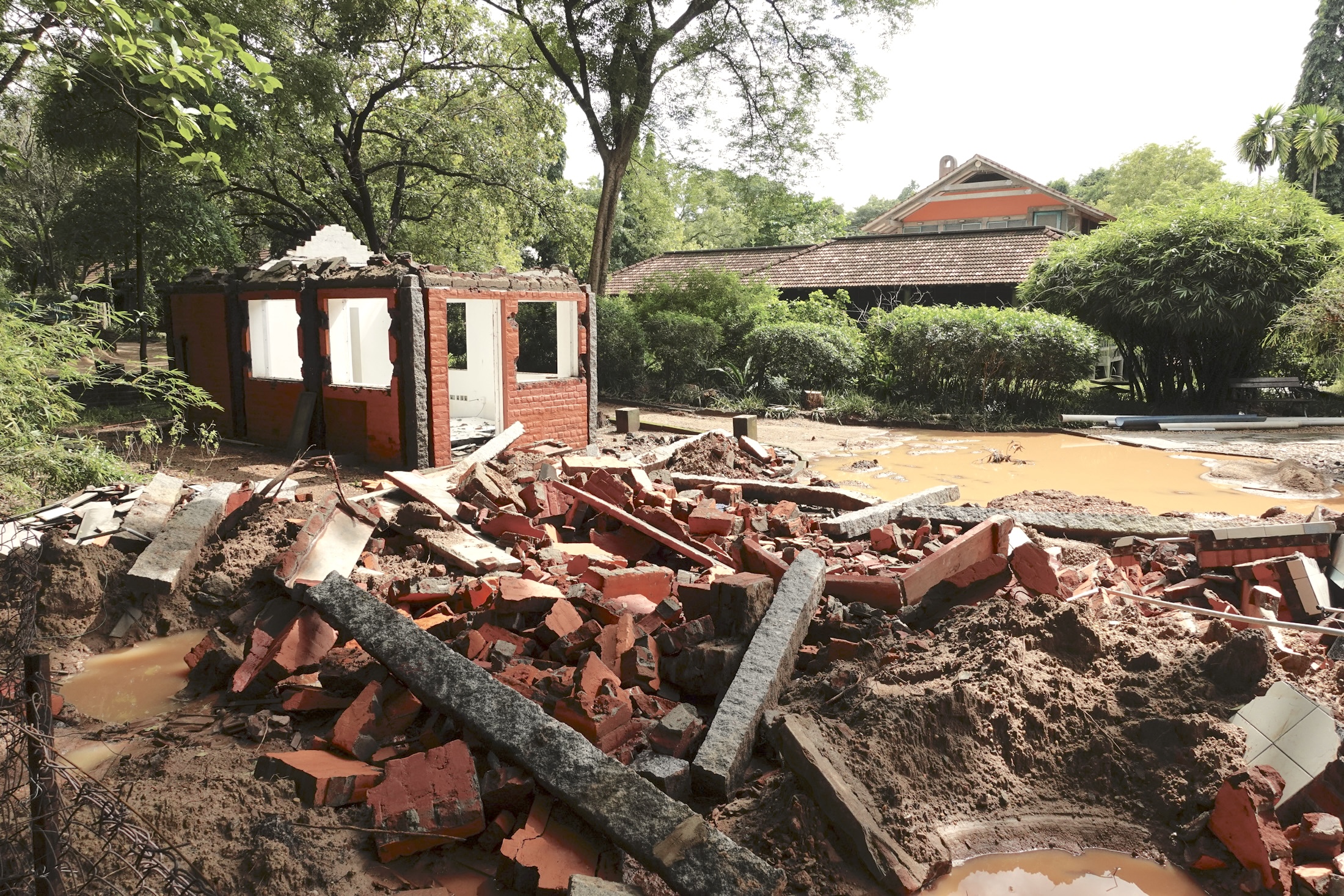
On 16th October 2025, Afsanah Guest House, one of Auroville’s most prominent hospitality venues, was forcefully taken over by the Foundation Office, with its appointed Security Service present. When the executive Auradha Markus, who had run the guest house since mid-2022, tried to retrieve her personal belongings, she was physically struck by an ‘Aurovilian’ security guard. Her belongings were withheld, and the office computers and files were taken.
The guest house, which had the honour to host His Holiness the Dalai Lama during one of his visits to Auroville, was privately financed by its founder and never received Government of India funding. Under Auradha’s and fellow executive Rosy’s management, Afsanah Guest House had prospered and doubled its income over four years. Many residents suspect its takeover was motivated by its suitability for hosting visiting politicians and VIPs.
After the takeover, longstanding guest bookings were cancelled without notice, and extensive tree clearing and infrastructure demolition took place to make way for a new section of a radial road, being built just a few metres from and parallel to an existing one in good condition. In typical unplanned modus operandi, the land at either end of this stretch is not owned by Auroville, so it is another piece of road from nowhere to nowhere.
Eternity Land Exchange Intensifies
Residents of Eternity community have been told that the Foundation Office now intends to exchange all 18.5 acres of the community’s land, not the 7.5 acres previously disclosed. The Foundation Office’s Working Committee claimed, without providing any documentation, that the expanded plan had been approved by the outgoing Governing Board.
The earlier proposal involved trading 7.5 acres of Eternity land, valued at over 130 crore rupees (over 14 million USD), for a similar amount of land in scattered parcels with a combined value of around 15 crore rupees (1.63 million USD) — leading to a loss to Auroville of 115 crore rupees (over 12.5 million USD). The beneficiary of that proposal is the son of T. Kannan, who also benefited from the earlier AuroOrchard land exchange (see Voice of Auroville Issues 06 and 07).
The real estate speculator T. Kannan has now acquired land near the Matrimandir’s Visitors’ Entrance, where he has begun construction and reportedly plans to build a hotel. Such developments raise questions about the effectiveness of the Foundation Office’s land exchange strategy, and cast serious doubt upon the Foundation’s claim that these land exchanges advance Auroville’s collective interests, rather than private gain.
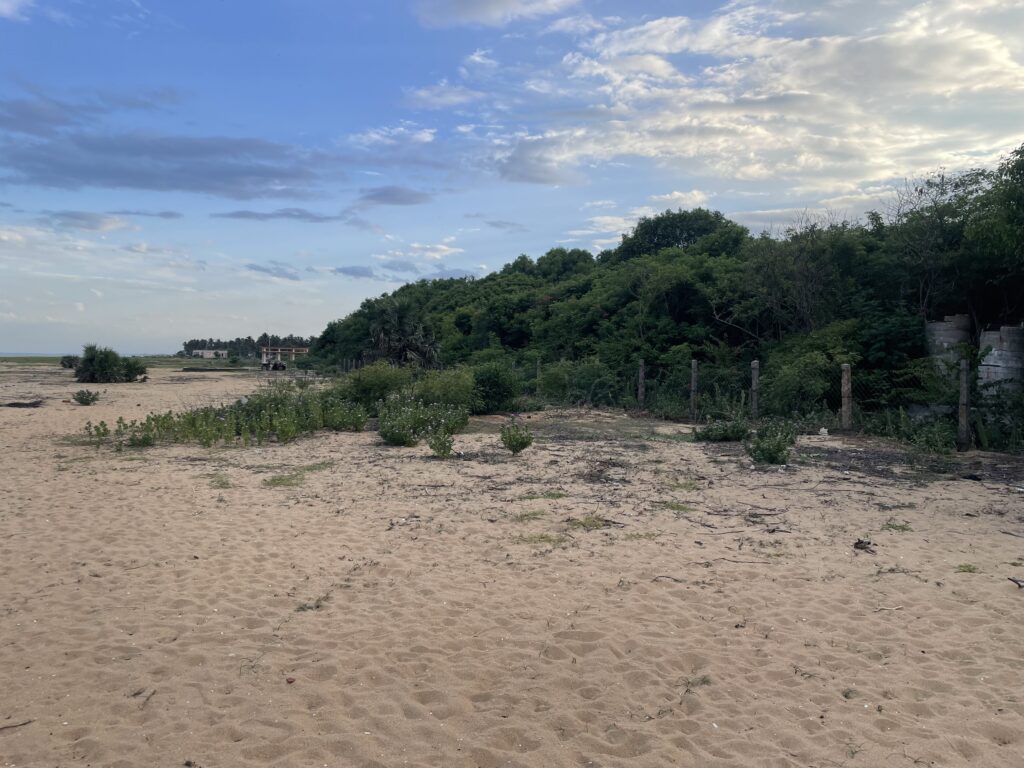
The Eternity land has been cared for by the same family since 1986, and developed into a thriving, ecologically biodiverse forest through private funds and collective effort. The environmental work done there is a model of coastal regeneration and sustainability, and its living fences are widely acknowledged to have provided much needed coastal protection in the area during past environmental emergencies.
To date, the Foundation Office has provided no clarity on what lands it would exchange for Eternity, nor how the loss of such high-value and ecologically significant land would benefit Auroville.
Annapurna Farm: Lease Deed Signed Despite Parliamentary Opposition
Despite the Parliamentary Standing Committee’s explicit recommendation that Annapurna Farm “should not be disturbed”, the Foundation Office signed a long-term rent-free lease that transfers control of the bulk of the farm to the Indian Institute of Technology (IIT) Madras. Signed on 23rd December 2025, the lease grants full use of 100 of the farm’s 135 acres for 33 years, including all areas of active farming, rainwater reservoirs, dairy and grazing grounds, granary and food processing facilities, workshops, residences, and other infrastructure.
The Working Committee of the Residents’ Assembly reports that the lease was executed without consultation and “in secrecy”. It has raised concerns about procedural and potentially illegal flaws in the process, and legal options are being explored.
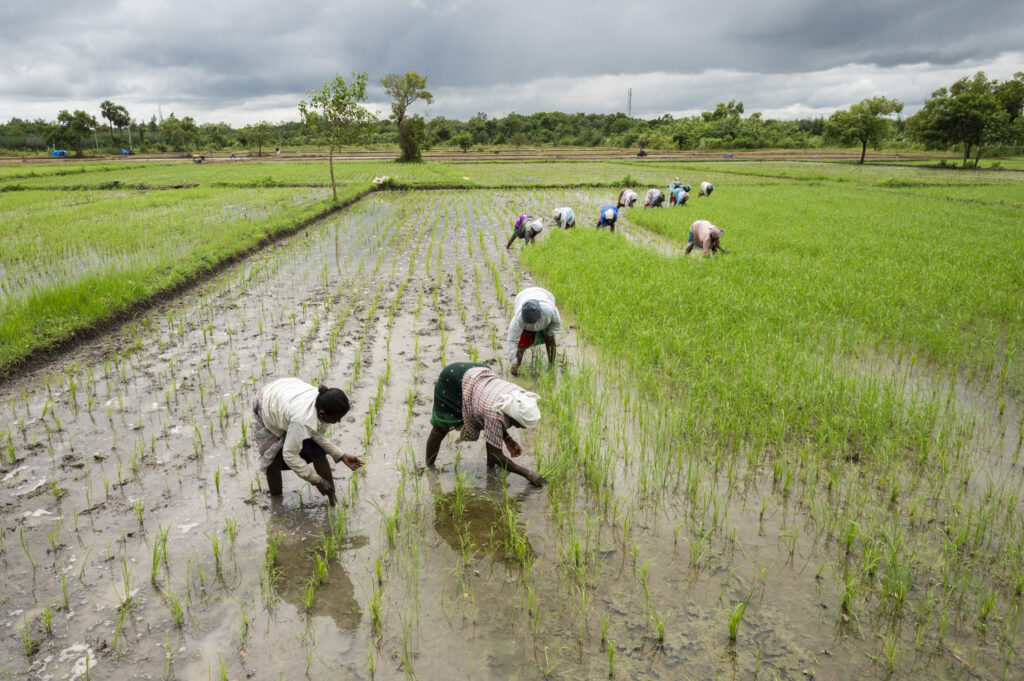
Annapurna is Auroville’s largest organic farm, supplying around 30% of locally produced food and processing 90% of the community’s grains.
A petition opposing the farm’s destruction has garnered over 16,000 signatures.
Systematic Closure of Community Activities
The Foundation Office’s Funds and Assets Management Committee has been systematically shutting down units and activities that are not run by its appointees and which allegedly do not generate enough income, signalling a shift towards profit-driven criteria at odds with Auroville’s founding ideals. In one such example, Anitya community was ordered to close its commercial activities without explanation. Founded in 2018 on abandoned land, the community has built a thriving residential area and had offered a range of healing therapies. In April 2024, one-third of its land, including the Thamarai Learning Centre, was arbitrarily taken over to construct an unplanned, and unfinished radial road.
Many other units offering services, therapies and products that provided modest but sustainable livelihoods for artists, writers, musicians and therapists have faced similar closures deemed financially unviable by the Foundation Office. This marks a troubling shift from Auroville’s founding vision of a community where money serves human aspiration rather than governs it, towards a model where commercial profitability determines which activities may exist.
Other Concerning Developments
Exclusionary Maintenance Increases
The Foundation Office’s Funds and Assets Management Committee announced a long pending increase in the maintenance allowance (in lieu of salary) for Aurovilians who work full-time for the community. However, this measure excludes large groups of residents, including newcomers, those working half-time, children and students, those on care or maternity support, elderly Aurovilians eligible for retirement funds (that have been mislabelled “unauthorised”), and farmers and foresters. Eligibility for the maintenance increase was made conditional upon submitting a mandatory work recognition form that forced residents to justify their working schedules, all within a 24-hour deadline.
Legal Updates
The legal validity of the Auroville Foundation’s Admissions and Terminations Regulations (2023) remains unresolved. Although court arguments concluded in August 2025, a written ruling was never submitted; hence the case is being reconsidered following the transfer of the presiding judge. Several court cases concerning the functioning of the Residents’ Assembly and the selection of its Working Committee are still pending in the Madras High Court.
On 28th October 2025, the Madras High Court dismissed an Appeal that had been submitted by a resident, challenging the Foundation Office’s land exchange transactions on procedural grounds. This appeal came after the court had ruled that the Foundation Office had followed due process after consultation with its own appointed committees.
Illegal Roadside Tree Cutting
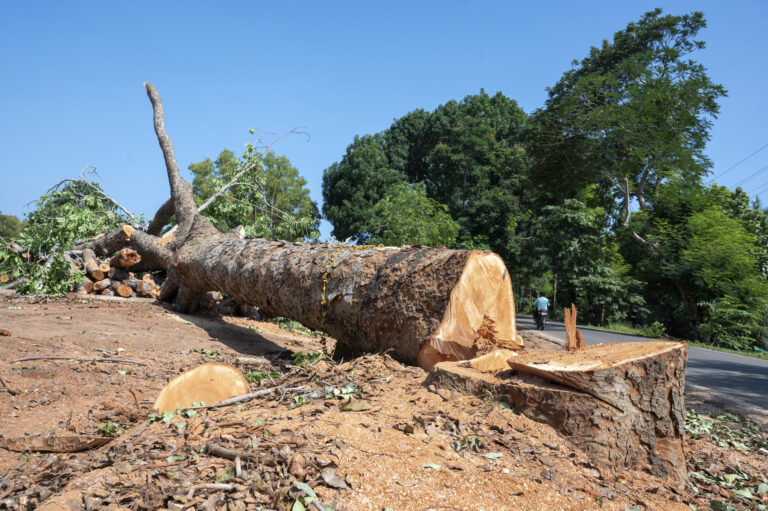
Six trees, including two mature valuable Kaya trees, were cut by Foundation Office associates near Edayanchavadi village for the outer ring road expansion, without the required Highway Department clearance. Despite initial intervention by some of the local population and the presence of police, the cutting was later completed, resulting in the Highway Department filing a police complaint.
Community Resistance and Resilience
Light for Unity Emerges
In late December 2025, the new community initiative Light for Unity emerged, formed by a group of Tamil Aurovilians seeking to “restore peace, harmony, dignity, and a conscious collective approach to community participation and governance”.
Following a contested ousting of the graphic design and printing unit from Town Hall by Foundation Office committee members, the group established itself in the Town Hall Graphic Section, opening the space as a “community hub” to address ongoing issues in the community. On 26th December 2025, the group claimed the use of the Auroville Council Room that had been seized just weeks earlier by Foundation appointees. Light for Unity framed both actions as efforts to reclaim community spaces for collective use.
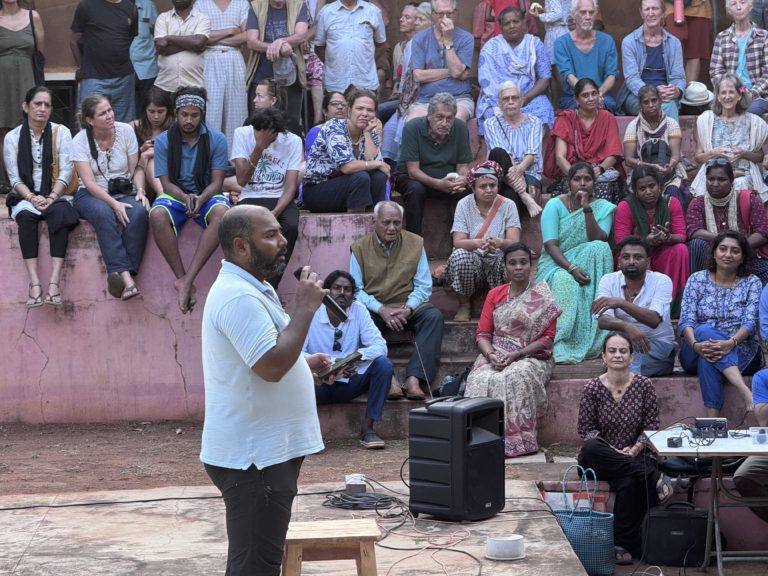
Following a community meeting held at Kalabhumi on 27th December, attended by 175 people, the Light for Unity group reported success in securing the replacement of a member of the Housing Board and the removal of an Executive of the Land Service, both of whom were appointees of the Auroville Foundation office. (The Executive of the Land Service has been reappointed since then.) Two weeks later, on 8th January 2026, a larger general meeting attended by over 500 residents met at Kalabhumi, where Light for Unity presented its envisaged role and initiated an emergency referendum of the Residents’ Assembly. This marked a notable resurgence in participation after two years of decreasing community meeting attendance due to threats against “unauthorised” public gatherings.
New Working Groups for the Residents’ Assembly
In January 2026, Light for Unity gathered signatures from over 300 residents to trigger an emergency referendum of the Residents’ Assembly. The referendum aimed to expedite the selection of new working group members for positions that have remained unfilled or whose membership terms have expired. This emergency measure became necessary because the Foundation Office and Governing Board have been blocking the Residents’ Assembly’s normal governance processes.
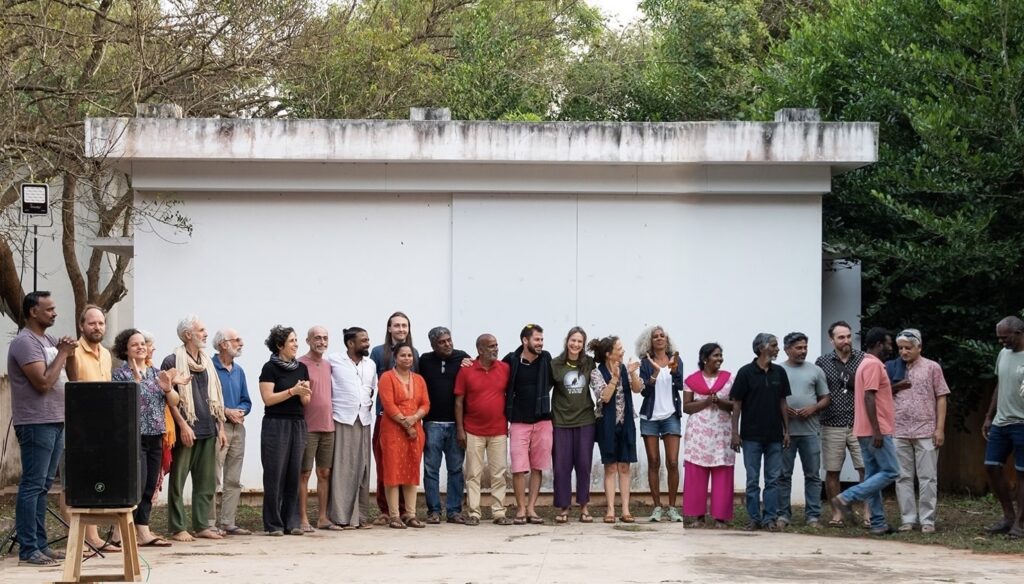
830 residents participated in the referendum, selecting a nine-member committee entrusted with appointing new working group representatives within two weeks.
In early February, the selection committee announced the new composition of four working groups: the Working Committee of the Residents’ Assembly, the Funds and Assets Management Committee, the Land Board and the Auroville Council.
However, the Foundation Office continues to maintain its parallel structure of Governing Board-appointed working groups, including its own Working Committee, Funds and Assets Management Committee, and Land Service. The legal dispute over which set of working groups holds legitimate authority remains ongoing in the courts.
Continued Documentation
Despite the closure of Auroville Today, documentation efforts continue through multiple channels. Voices of Auroville maintains its quarterly coverage of events for a worldwide readership, while the Evolving Galaxy Bulletin provides regular community updates. The biweekly newsletter Auroville Witness publishes first-person narratives from current and former residents and those with long-term relationships with Auroville. Other ongoing coverage is provided by The Tragi-Comik Newsletter, the Auroville Uncensored YouTube channel, and international support networks such as the Auroville International Centers or the Auroville Global Fellowship.
Gratitude Letters
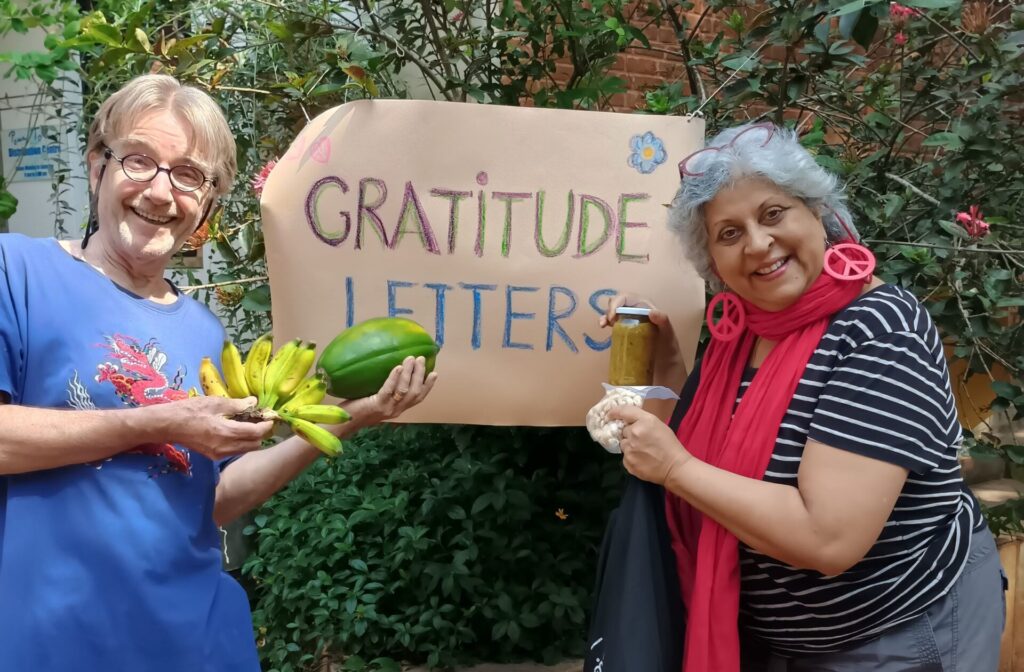
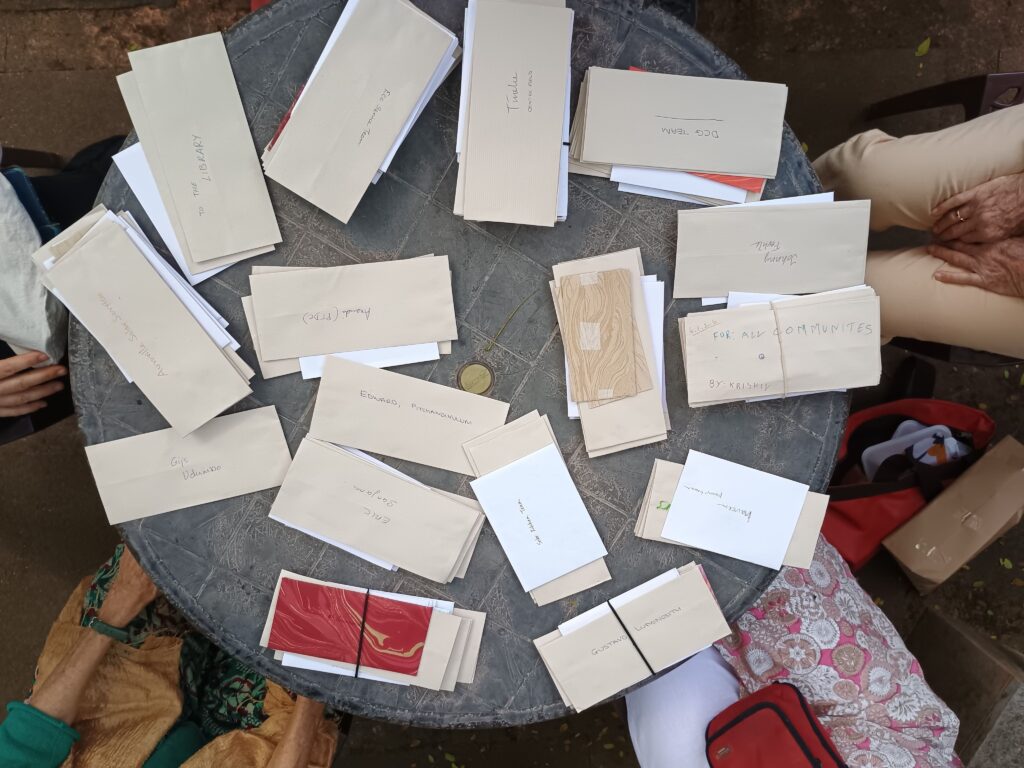
In January 2026, Heartweavers, a group of Aurovilians formed during the current crisis to foster connection beyond polarities, organised two sessions inviting residents to write letters of gratitude. The response was remarkable: the first session at PTDC and Solar Kitchen gathered 180 letters in just four hours, with a second equally successful session following. Addressed to fellow Aurovilians, working groups, or simply “the Divine”, these handwritten messages of appreciation are being distributed throughout the community. In a time of division and pressure, this community initiative reflects the efforts made to foster a spirit of care and solidarity.
Looking Ahead
As 2026 begins, Auroville faces deep uncertainty. Fundamental questions remain unresolved: When and with whom will a new Governing Board be constituted, and what will be its approach? Will the Parliamentary Standing Committee’s recommendations be taken seriously by those in positions of authority? What lies ahead for Annapurna Farm, and for residents facing termination notices?
The Parliamentary Standing Committee’s report marks a significant moment: recognition from within India’s democratic institutions that residents’ concerns are legitimate, and that a different course is both possible and necessary. Whether this recognition translates into meaningful change, however, depends largely on forces beyond the community’s control.
What does remain within the community’s control is its response. The emergence of Light for Unity, the selection of new working group representatives, ongoing documentation efforts, petitions for decision-making, and everyday acts of solidarity all demonstrate that Auroville’s core spirit — human unity, conscious collective endeavour, and the commitment to build something meaningful — endures.
The crisis in Auroville mirrors broader global patterns of democratic erosion, where centralised authority diminishes citizens’ rights and suppresses dissent. Yet the community’s sustained resistance also reflects a wider truth: communities grounded in shared ideals can preserve integrity and solidarity even under immense pressure.
As always, the support of friends and wellwishers worldwide remains vital. Your awareness, advocacy, and practical support make a real difference in safeguarding this unique experiment for future generations. For ways to help protect Auroville’s vision and its people, please see “How to Help?” at the end of this issue.
Extracted from Voices of Auroville, Issue 10, February 2026
6 responses